
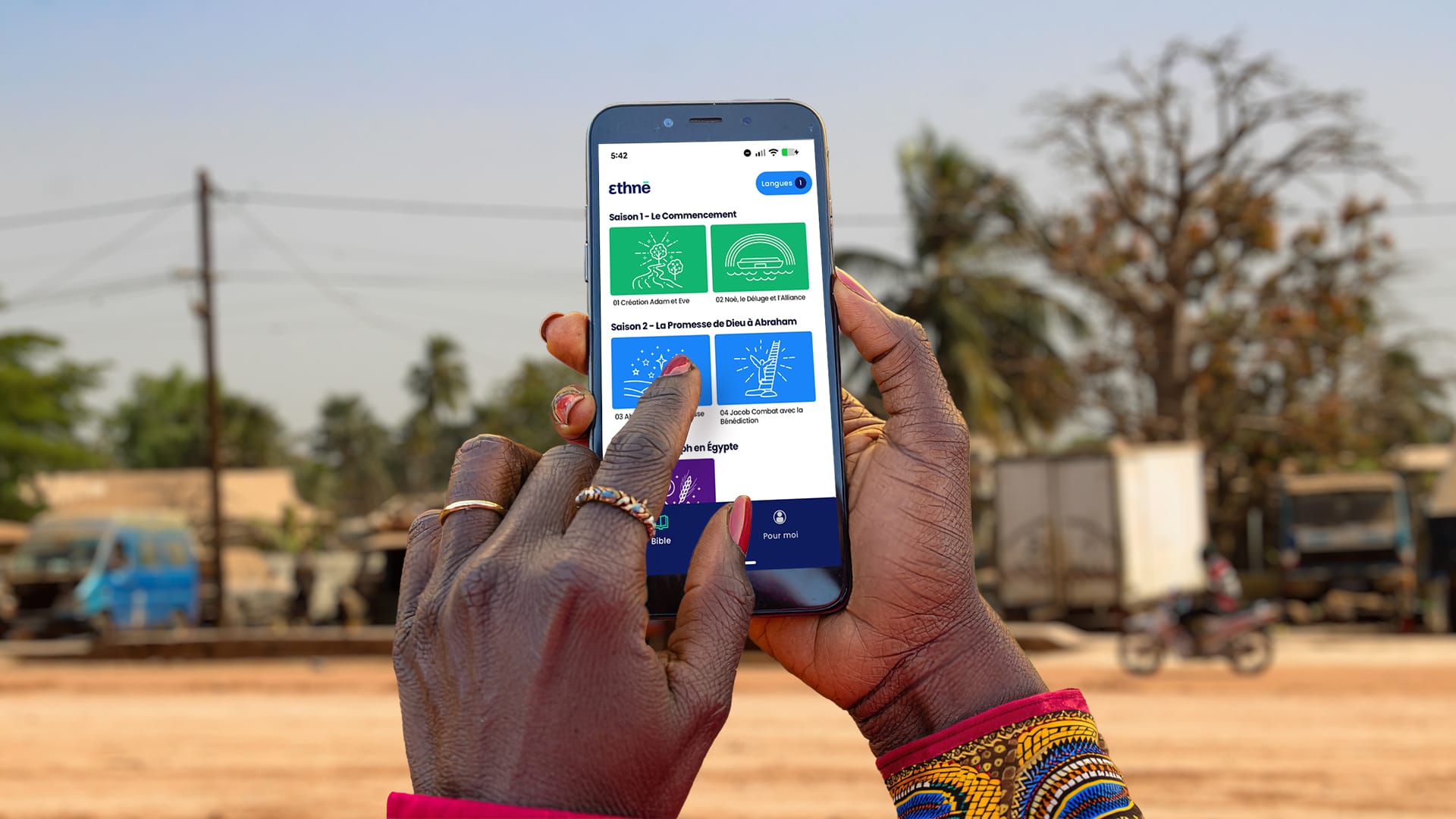
Varama translation added to ethnē!
Varama Bible translation launches for ~1,000 speakers in Gabon, bringing God's Word to an endangered Sira Bantu language community.

Estimated Speakers: ~1,000
Geographic Distribution: Spoken in Ogooué-Maritime and Ngounié Provinces of Gabon
Learn more: Ethnologue, Joshua Project and Wikipedia
Approximately 1,000 speakers in Gabon speak Varama, a Niger-Congo language classified within the Sira group of Northwest Bantu. The language lives primarily in Ogooué-Maritime Province—around Ndougou, Rembo Eshira lagoon, and Fernand Vaz—and also appears as Vungu in Ngounié Province near Guiétsou and Mandji. Varama and Vungu speakers identify as one ethnic group, sharing the same cultural identity despite geographic separation; in their own tongue they call the language Guivarama or Guivoungou, and they understand this Bible translation as a tool that speaks to their heart language—the language of home, emotion, and spiritual intimacy.
For churches, missionary organizations, and faith communities in Gabon's Ogooué-Maritime and Ngounié Provinces, providing the Bible in Varama ensures that the Christian message reaches speakers in their heart language—the language of family, memory, and prayer. Varama speakers are generally bilingual with French, but French belongs to school and government rather than the hearth. Without a Varama translation, this community of roughly 1,000 would rely on Scripture in French or neighboring Sira languages, keeping God's Word one step removed from the language that carries their identity.
Show this QR code to a friend so that they can experience this Varama Bible in ethnē today!

Varama belongs to the Atlantic-Congo branch of Niger-Congo, descending through Benue-Congo and Bantoid into the Southern Bantu family, specifically the Northwest Sira group. Speakers in Ogooué-Maritime Province call themselves Varama, while those in Ngounié Province use the name Vungu (or Vumbu), yet both groups regard themselves as a single ethnic community with common cultural practices and mutual intelligibility. The people share close cultural ties with the Eshira, sometimes being historically identified with them due to overlapping territory near Mandji and similar customs. Traditional spiritual life centers on animism with veneration of ancestors, belief in various spirits (génies), the ritual power of twins, and ceremonies such as Bwiti, Mouiri, Nyèmba, and the more recent Mabandzi and Guilobo practices. Social structure features independent villages organized by family and clan, with customary chiefs maintaining cohesion across scattered settlements. Despite this rich cultural identity, the language remains unwritten in daily use, and its vitality erodes as fewer children adopt it as their primary tongue.
No Scripture translations or Christian audio resources were previously available in Varama, leaving the community dependent on related Sira languages—particularly Eshira—for access to the Bible. French and American missionaries established a Christian presence in Gabon from the 1840s, yet specific documentation of church life among Varama speakers remains sparse in available sources. This partial audio Scripture release provides oral access to God's Word for a community of audio learners whose language lives primarily in speech rather than print, enabling Varama-speaking believers to worship and disciple others in the language that carries their deepest emotions and spiritual understanding. The collaboration between Hosanna and Coordination Inter-Eglises pour la Traduction et l'alphabetisation en Langue Gabonaise (CIEATLG) reflects a partnership model that supports indigenous leadership and local church capacity, bringing Scripture into the heart language of this small but distinct Bantu community.
Have a question, or an idea to share? Reach out anytime — we usually reply within a day.
Download ethnē — the Bible app for all peoples.



