
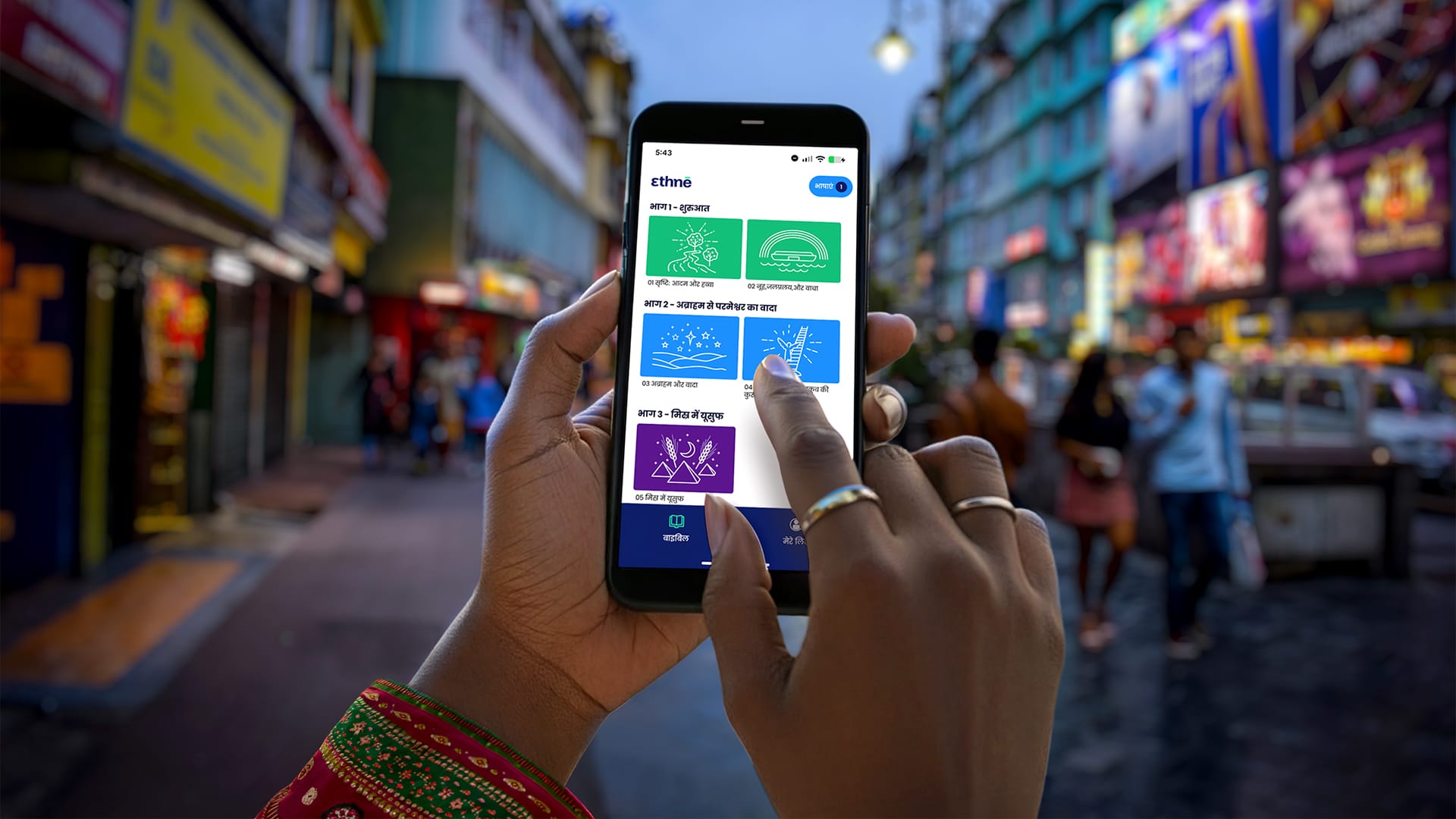
Koch translation added to ethnē!
Koch Bible translation launches for 36,000–70,000 speakers in Northeast India and Bangladesh—a Tibeto-Burman heart language now carrying Scripture.

Estimated Speakers: ~36,000–70,000
Geographic Distribution: Spoken in Meghalaya and Assam in Northeast India, and in northern Bangladesh
Learn more: Ethnologue, Joshua Project and Wikipedia
Between 36,000 and 70,000 people speak Koch as their heart language—the tongue that carries their deepest identity and connects them to their ancestors. The 2011 census recorded 36,434 native speakers, while field research in Northeast India and northern Bangladesh suggests the number may reach 70,000. Koch speakers live primarily in Meghalaya state (especially West Garo Hills District, with ~25,000 speakers in Meghalaya alone) and Lower Assam (including Goalpara, Nagaon, Dhubri, Baksa, and Bongaigaon districts), with significant communities in northern Bangladesh's Dhaka division. Smaller Koch-speaking populations also inhabit Bihar, Tripura, West Bengal, and areas near Gazipur.
For churches, missionary organizations, and faith communities across Meghalaya, Assam, and northern Bangladesh, providing the Bible in Koch ensures that the Christian message reaches speakers in their heart language—the language in which people think, pray, and express their deepest beliefs. Most Koch speakers are bilingual in Bengali, Assamese, or Garo, yet those remain languages of school and market rather than of the home. Without a quality Koch translation, tens of thousands of speakers would rely on Scripture in neighboring languages that keep God's Word one step removed from daily life and prayer.
Show this QR code to a friend so that they can experience this Koch Bible in ethnē today!

Koch comprises six main varieties forming a dialect chain: Koch-Rabha, Wanang (also called Swmbri or Pani Koch), Harigaya, Margan, Chapra (Dasgaya), and Tintekiya, stretching geographically from north to south with adjacent dialects showing higher mutual intelligibility than those at opposite ends. Additional ethnolinguistic groups include Satpariya, Sankar, Banai, and Koch Mandai; Koch society divides into nine endogamous groups that traditionally intermarried rarely, each containing smaller clans called "nikini." Harigaya serves as a lingua franca at social gatherings and is widely understood across varieties; in Bangladesh, Tintekiya and Chapra predominate. Writers use Assamese and Bengali scripts primarily, with older speakers favoring Assamese and younger speakers increasingly choosing the Latin alphabet—standard orthographies in both scripts were proposed in 2009, though individual spelling conventions persist. A new Koch script created in 2021 by Day Chand Rangag has gained only limited adoption, and the language remains rarely written, with poems and short stories appearing occasionally in magazines. Koch people traditionally practice animism and worship the Hindu goddess Shakti, though some are Christian or Muslim; the community gained Scheduled Tribe status in Meghalaya in 1987, and organizations like Koch Krorang Mathop in Tura and the Koch Development Forum actively promote the language and publish materials including an annual magazine.
Some Koch people worship as Christians, alongside Hindu and Muslim believers within the community. Global Recordings Network reports that Koch speakers include "Hindu, Muslim & Christian" adherents, yet available Christian resources remain limited. The community includes many oral and audio learners—GRN notes that speakers "Understand Bengali; Few literate"—making audio Scripture resources particularly vital for spiritual formation and discipleship. SIL has conducted extensive linguistic documentation since 2006, producing dictionaries and grammatical descriptions that lay a foundation for Scripture translation. This partial audio translation, published by Hosanna and Bible Students Fellowship of Bangladesh, brings God's Word in Koch speakers' heart language to communities in both Northeast India and northern Bangladesh, equipping indigenous believers to grow in faith and share the gospel within their nine ethnolinguistic groups and broader Koch networks.
Have a question, or an idea to share? Reach out anytime — we usually reply within a day.
Download ethnē — the Bible app for all peoples.



