
Mahali translation added to ethnē!
Mahali partial audio Bible translation reaches ~26,000 language speakers in India and Bangladesh through oral Scripture.

Estimated Speakers: ~26,000
Geographic Distribution: Primarily in Jharkhand and West Bengal, India; northern Bangladesh
Learn more: Ethnologue, Joshua Project and Wikipedia
Having a Mahali Bible translation is critically important for reaching approximately 26,000 speakers in Jharkhand and West Bengal, India, and northern Bangladesh. The Mahali people—a small Scheduled Tribe ethnic group whose name derives from "mad" (bamboo or banyan), reflecting their traditional basketry occupation—live in separate villages from both Santali and Bengali communities and maintain a distinct cultural identity despite linguistic similarities with Santali.
For churches, missionary organizations, and faith communities throughout eastern India and northern Bangladesh, providing the Bible in Mahali ensures that the Christian message reaches speakers in their heart language—the language of home, identity, and deepest understanding. Although the Mahali are multilingual and commonly speak Santali, Odia, Bengali, and Hindi as second languages, these regional and national languages carry the weight of formal education, government, and commerce rather than the intimacy of family and cultural heritage. Without Scripture in Mahali, readers must navigate the gospel through the lens of languages associated with dominant cultures, creating a barrier that prevents the Bible's message from penetrating hearts with the clarity and power it carries when heard in one's mother tongue. This partial audio translation removes that barrier, allowing Mahali speakers to encounter God's Word in the language that most naturally expresses their thoughts, emotions, and spiritual longings.
Show this QR code to a friend so that they can experience this Mahali Bible in ethnē today!

Mahali is closely related to Santali and Turi. Scholarly debate continues about whether Mahali is a distinct language or a dialect of Santali; some linguists classify it as a possible dialect of Santali, while others consider it a separate but closely related language within the Munda family. No distinct dialects are documented, and there is high mutual intelligibility with Santali. Despite this linguistic overlap, the Mahali people themselves consider their language distinct from Santali, asserting a separate identity. The language uses Bengali script for limited written purposes and is not standardized; UNESCO characterizes Mahali writing as having limited written use. The Mahali society is patriarchal and divided into four main clans (Hansda, Murmur, Hembram, and Maddi in India; three sub-tribes in Bangladesh: Nagpuriya, Sikroya, and Rajmahle), and they practice Hinduism blended with ancestral worship and reverence for natural elements, celebrating festivals such as Gramdoti puja and maintaining distinctive marriage and burial customs.
With low literacy levels among the Mahali, oral and audio forms of the gospel are essential for effective ministry, making this partial audio translation a strategic tool for churches and mission organizations. Christian resources already available—including audio Bible stories, evangelistic messages, and audio-visual Bible lessons produced by Global Recordings Network—demonstrate the need for oral Scripture engagement in a community where written materials have limited impact. The Mahali live in villages separate from both Santali and Bengali communities, requiring contextualized outreach that respects their distinct identity and addresses their specific spiritual needs. Prayer efforts focus on reaching community council leaders and helping the Mahali people experience abundant life in Christ, goals that become achievable when Scripture is accessible in the heart language through audio formats that bypass literacy barriers and honor the oral communication patterns central to Mahali culture.
We'd love to hear from you how we can improve this post or how this translation has been impactful.
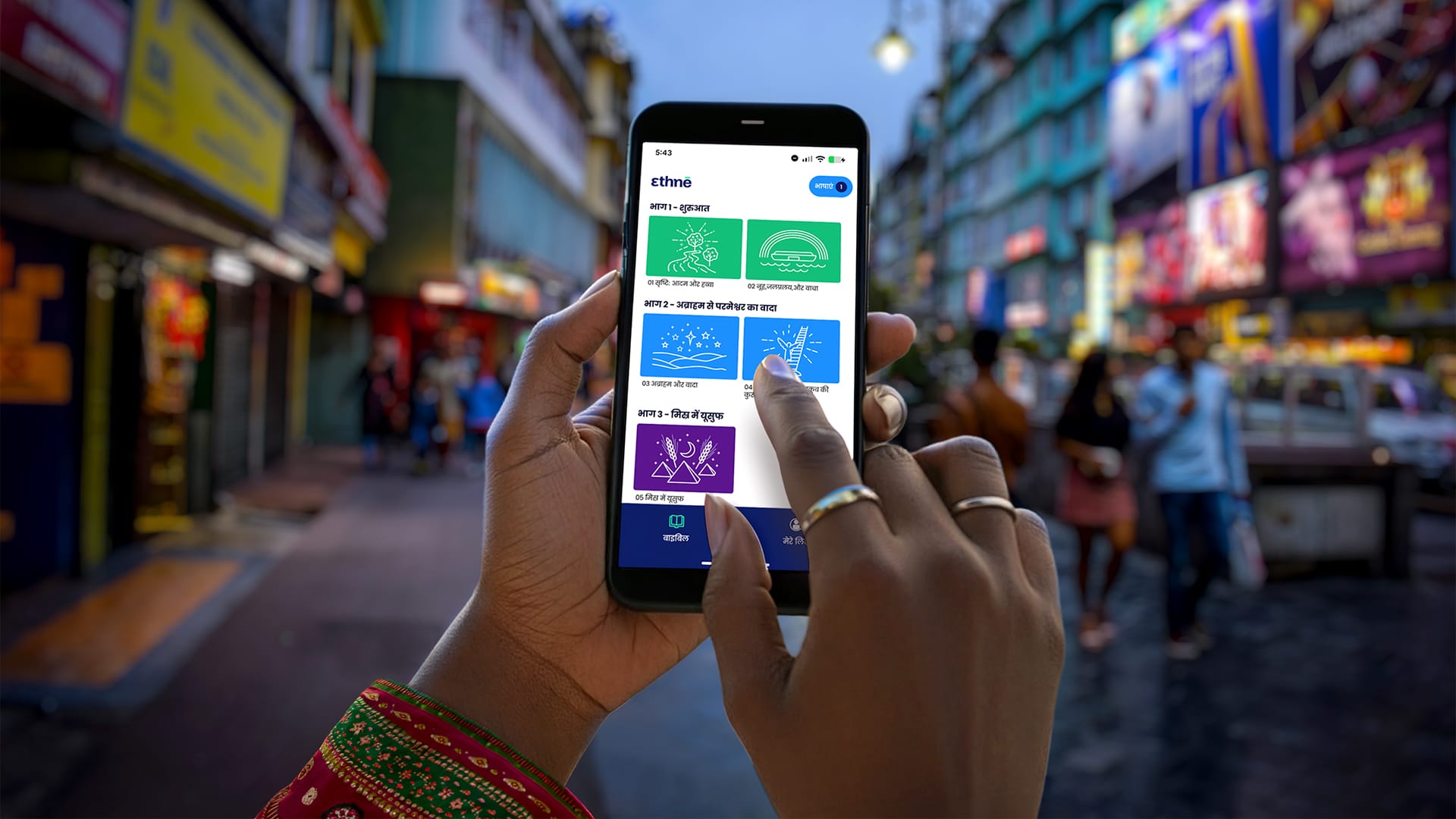
Download ethnē — the Bible app for all peoples.



