
Malto translation added to ethnē!
Malto Bible translation reaches ~159,000–254,000 Dravidian speakers in India's Rajmahal Hills and Bangladesh in their heart language.

Estimated Speakers: ~159,000–254,000
Geographic Distribution: Rajmahal Hills of Santhal Pargana, Jharkhand; also West Bengal, Bihar, and Bangladesh
Learn more: Ethnologue, Joshua Project and Wikipedia
Having a Malto Bible translation is critically important for reaching approximately 159,000–254,000 speakers in the Rajmahal Hills of Jharkhand, West Bengal, Bihar, and Bangladesh. The Malto language—also known by the names Sauria Paharia, Mal Paharia, and Kumarbhag Paharia—is spoken by the Paharia tribal people. As the northernmost Dravidian language in India, Malto marks an ancient linguistic heritage among hill-dwelling communities whose villages scatter across the Rajmahal Hills, often isolated by Santhal settlements in the valleys.
For churches, missionary organizations, and faith communities throughout Jharkhand and eastern India, providing the Bible in Malto ensures that the Christian message reaches speakers in their heart language—the tongue of home, family, and deep cultural identity. Although approximately 40% of Malto speakers are bilingual or trilingual in Hindi, Bengali, or Santali, children use Malto only at home and not in school. For the Paharia people—whose traditional religion blends Hinduism with folk beliefs and whose Christian presence remains limited—access to Scripture in Malto removes the barrier that forces readers to encounter God's Word in a second language, enabling genuine spiritual engagement and indigenous faith expression.
Show this QR code to a friend so that they can experience this Malto Bible in ethnē today!

Malto belongs to the Dravidian family, specifically the Northern Dravidian branch and the Kurukh–Malto subgroup; it is closely related to Kurux (Oraon) and distantly to Brahui of Pakistan. The language divides into two main varieties often classified as separate languages: Sauria Paharia (ISO mjt, ~235,000–242,000 speakers) and Kumarbhag Paharia (ISO kmj, ~12,500 speakers), which share approximately 80% lexical similarity but are not mutually intelligible. Malto also exhibits continuum-like variation across three recognized sub-varieties—Sawriya Paharia, Mal Paharia, and Kumarbhag Paharia—reflecting the scattered settlement pattern of Pahariya villages on hilly tracts. Speakers primarily write Malto in Devanagari script, though Bengali and Latin alphabets also appear; the language reaches audiences through newspapers and radio in India. Ethnologue classifies Sauria Paharia as "stable," used as the first language by all in the ethnic community, yet the language faces pressure from dominant Hindi, Bengali, and Santali and remains untaught in schools, marking it as vulnerable in Glottolog's assessment.
Churches and faith communities working among the Paharia people encounter a limited but growing Christian presence alongside traditional religions that blend Hinduism and folk beliefs. The Bible Society of India has engaged in translation work involving Malto, including cultural adaptations of Biblical teachings using Devanagari script, and Global Recordings Network has produced Gospel recordings and audio Bible stories in Malto/Sauria Paharia specifically for evangelism among oral cultures. This partial audio translation by Bible Students Fellowship of Bangladesh addresses the reality that many Malto speakers are oral or audio learners, enabling Scripture engagement without literacy barriers and supporting evangelism in scattered hilltop villages. Although no complete Bible translation is widely documented, providing Scripture portions in Malto equips indigenous leaders and missionaries to plant churches, disciple believers, and establish worship rooted in the Paharia people's heart language rather than relying solely on Hindi, Bengali, or other trade languages that carry institutional status but lack the intimacy of mother-tongue faith.
Have a question, or an idea to share? Reach out anytime — we usually reply within a day.
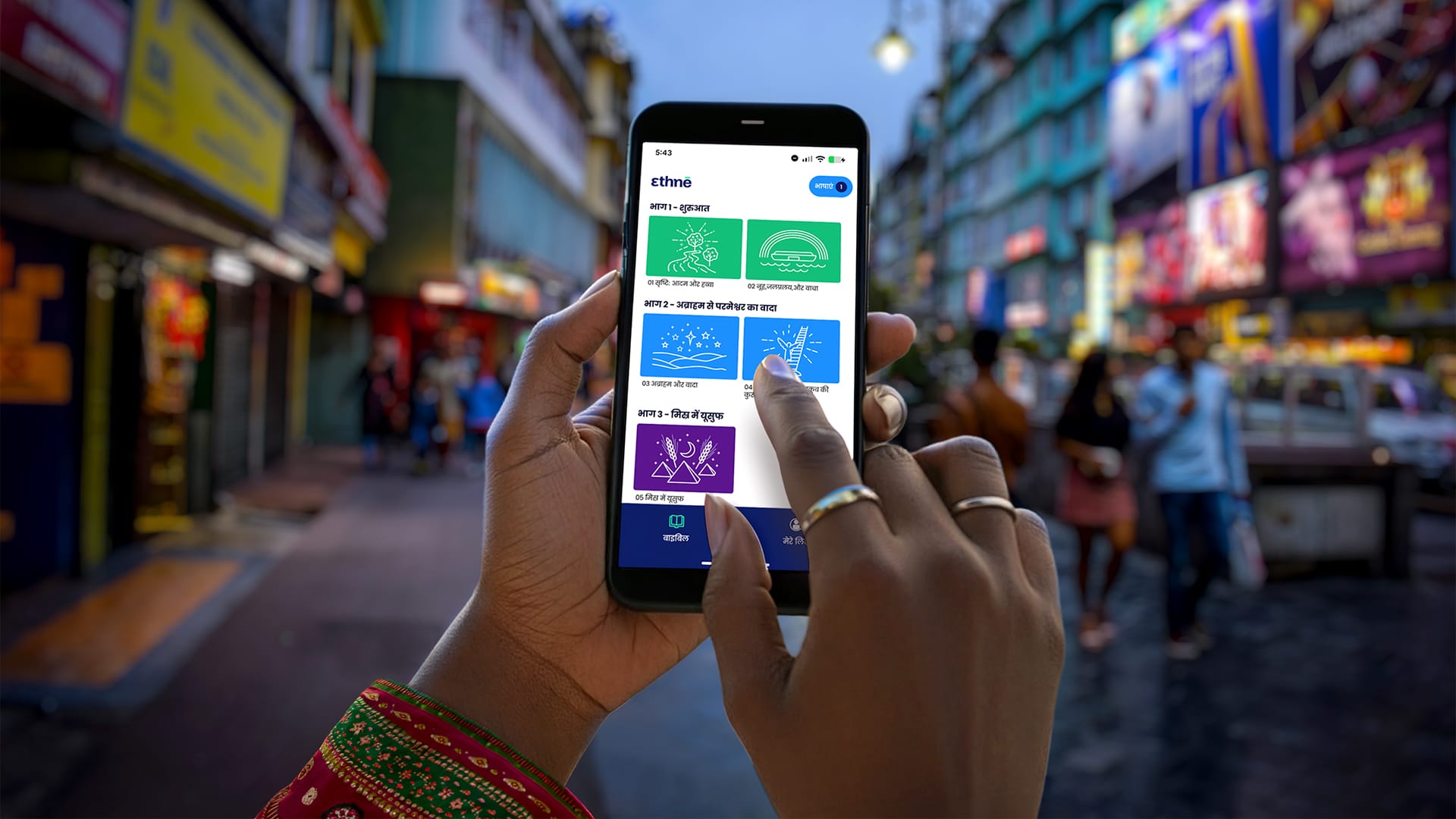
Download ethnē — the Bible app for all peoples.



