Estimated Speakers: 41–52 million
Geographic Distribution: Spoken primarily in Sudan, with communities in South Sudan, Egypt, Eritrea, and Ethiopia
Learn more: Ethnologue, Joshua Project and Wikipedia
The importance of the Sudanese Arabic language
Having a Sudanese Arabic Bible translation is critically important for reaching tens of millions of people across northeastern Africa. Sudanese Arabic, known locally as Dariji, is spoken by approximately 41 million first-language speakers and over 52 million people total across Sudan, South Sudan, Egypt, Eritrea, and Ethiopia. As the primary lingua franca of Sudan, it serves not only ethnic Arab communities but also speakers from Nubian, Beja, Fur, and Nilotic language backgrounds who adopt it as a common means of communication. The dialect traces its origins to Arabic varieties brought to the region following the 7th-century Treaty of Baqt and has since absorbed rich influences from the indigenous languages of the Nile Valley, giving it a character distinct from any other Arabic variety.
For churches, missionary organizations, and faith communities throughout Sudan, providing the Bible in Sudanese Arabic ensures that the Christian message is accessible to speakers in their heart language—the language in which they think, pray, and express their deepest beliefs. Christian communities in Sudan span Roman Catholic, Anglican, Coptic, and Pentecostal congregations, concentrated particularly in Khartoum and in regions bordering South Sudan. Without Scripture in Sudanese Arabic, believers must rely on Modern Standard Arabic, which feels distant from the rhythms of daily spoken life and limits the depth of personal engagement with God's Word.
About this Sudanese Arabic translation
- Local Name: كتاب المقدس بالعربي السوداني
- English Name: The Holy Bible in Spoken Sudanese Arabic
- Translation Scope: Audio Bible
- Audio by Spoken Worldwide
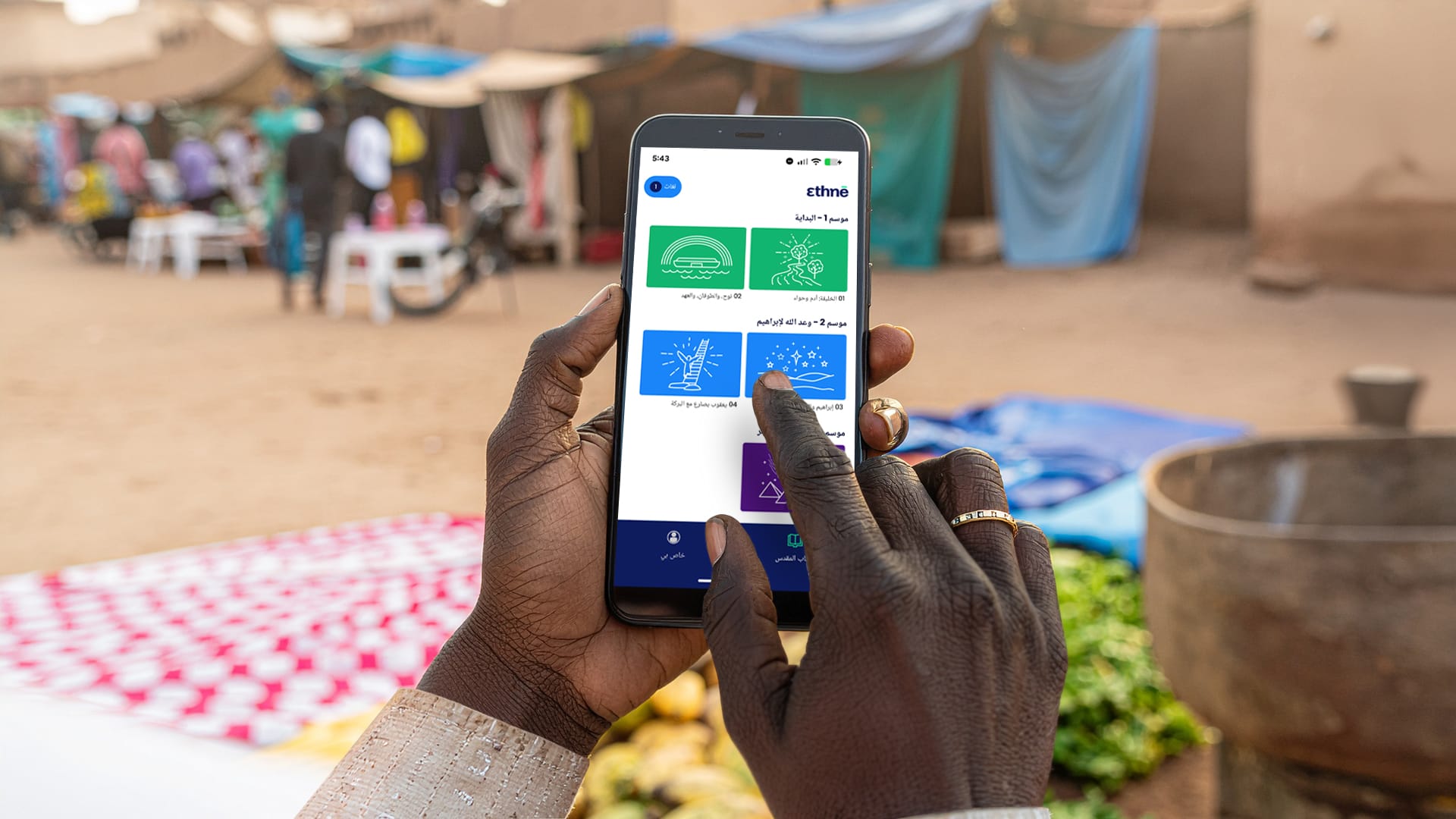
Show this QR code to a friend so that they can experience this Sudanese Arabic Bible in ethnē today!

Unlike Modern Standard Arabic, Sudanese Arabic retains archaic phonological features, including the distinctive pronunciation of the letter ج as a voiced palatal stop, giving it a sound unlike any other Arabic variety. Its vocabulary carries deep impressions from Nubian, Beja, Fur, and Nilotic languages, making it a living record of Sudan's layered cultural history. The dialect has also given rise to Juba Arabic, the Arabic-based creole used across South Sudan as a common trade language, extending its reach and influence far beyond Sudan's borders. Providing Scripture in this spoken variety affirms the distinct linguistic and cultural identity of Sudanese Arabic speakers and makes the biblical text genuinely accessible rather than merely understandable.
This Sudanese Arabic translation in local churches
Churches across Sudan and the Sudanese diaspora use Scripture in the heart language for worship, discipleship, and community formation. The audio format carries particular weight in Sudan, where ongoing conflict and displacement have disrupted educational access for many believers, making spoken Scripture a practical and powerful resource for those who cannot read. Indigenous Sudanese church leaders—serving in Episcopal, Catholic, and Pentecostal congregations—can teach and preach from Scripture using the idioms and expressions their communities truly know, deepening theological understanding and building stronger roots for the local church.