
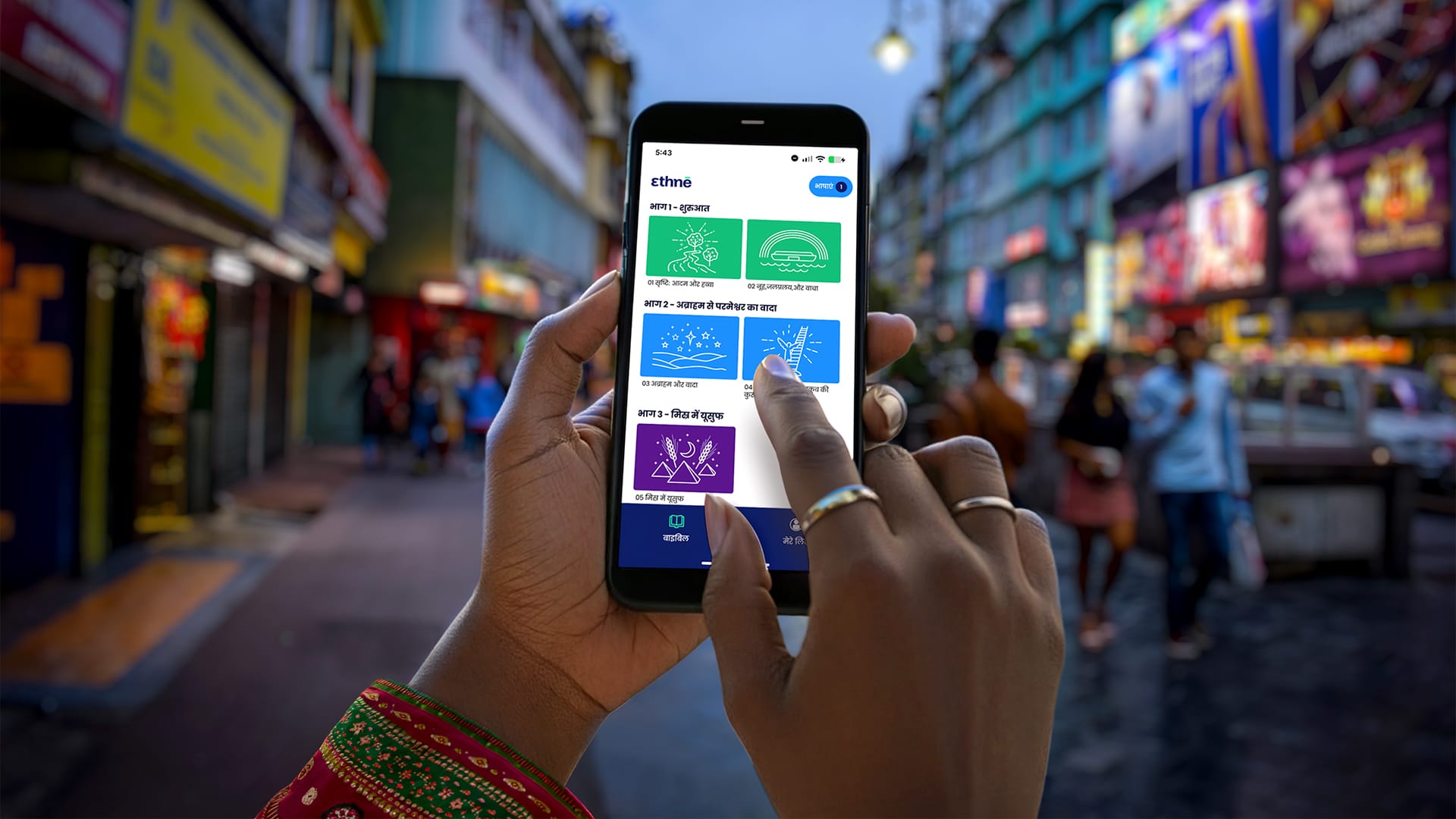
Khandesi New Testament Audio Bible added to ethnē!
Khandesi New Testament Bible Audio and Text translation from Davar Partners International and Bridge Connectivity Solutions added to ethnē!

Estimated Speakers: 1.5–1.9 Million
Geographic Distribution: Spoken primarily in the Khandesh region of northwestern Maharashtra, India, across the districts of Dhule, Jalgaon, Nandurbar, and parts of Nashik, with smaller communities in Gujarat and Madhya Pradesh
Learn more: Ethnologue, Joshua Project and Wikipedia
Having a Khandesi Bible translation is critically important for reaching the nearly 1.86 million speakers of this Indo-Aryan language, spoken primarily in the Khandesh region of northwestern Maharashtra, across districts including Dhule, Jalgaon, Nandurbar, and Nashik. Khandesi consists of Khandeshi proper alongside the Dangri and Ahirani dialects, with Ahirani being the most widely spoken variety, and the language is written using the Devanagari alphabet. Though Khandesi sits within the broader Indo-Aryan family, it maintains a distinct linguistic identity shaped by centuries of contact with Gujarati, Rajasthani, Bhili, and Marathi. Bilingualism is widespread among Khandesi speakers, with nearly all exhibiting functional proficiency in Marathi due to its status as the dominant regional language.
For churches, missionary organizations, and faith communities throughout this region, providing the Bible in Khandesi ensures that the Christian message reaches speakers in their heart language, the language in which they think, pray, and express their deepest beliefs. Younger generations in urbanizing areas increasingly adopt Marathi or Hindi for education and employment opportunities, making mother-tongue Scripture all the more urgent for communities where Khandesi remains the primary vehicle of everyday life and identity. Without a quality Khandesi Bible translation, believers would have to rely on Marathi or Hindi translations that create real barriers to personal spiritual connection and engagement with the biblical text.
Show this QR code to a friend so that they can experience this Khandesi Bible in ethnē today!

Khandesi exhibits lexical similarities of 63–66% with Marathi, which has led to ongoing debates over whether it constitutes a distinct language or a dialect, though its independent development and closer ties to languages like Gujarati and Rajasthani support its separate status. Social and caste-based categories of the language include Ahirani, Gujar, Bhilau, Maharau, Lewa, and Purbhi, while region-based sub-dialects carry names tied to their geographic locations along the Tapi River basin and surrounding hills. This linguistic diversity reflects the layered cultural identity of the Khandesh region, and a Khandesi Bible translation honors that identity by allowing theological discussions, worship, and biblical education to take place in the language Khandesi speakers use at home and in community life, using idioms, metaphors, and vocabulary that resonate authentically with their experience.
Christians represent a smaller community within the Khandesh region, worshipping alongside a broader population of Hindus, Muslims, Buddhists, and Jains. Churches across this region use Khandesi Scripture in worship services, Sunday schools, and personal devotion, making Scripture memorization, study, and prayer more natural and accessible. For Khandesi believers who have grown up hearing and speaking this language at home, encountering God's Word in Khandesi carries a depth and intimacy that translations in Marathi or Hindi cannot fully replicate. A quality Khandesi translation also supports the growth of indigenous Khandesi-speaking Christian leadership, equipping pastors and teachers to study and proclaim Scripture without depending on the linguistic mediation of a second language.
Have a question, or an idea to share? Reach out anytime — we usually reply within a day.
Download ethnē — the Bible app for all peoples.



