
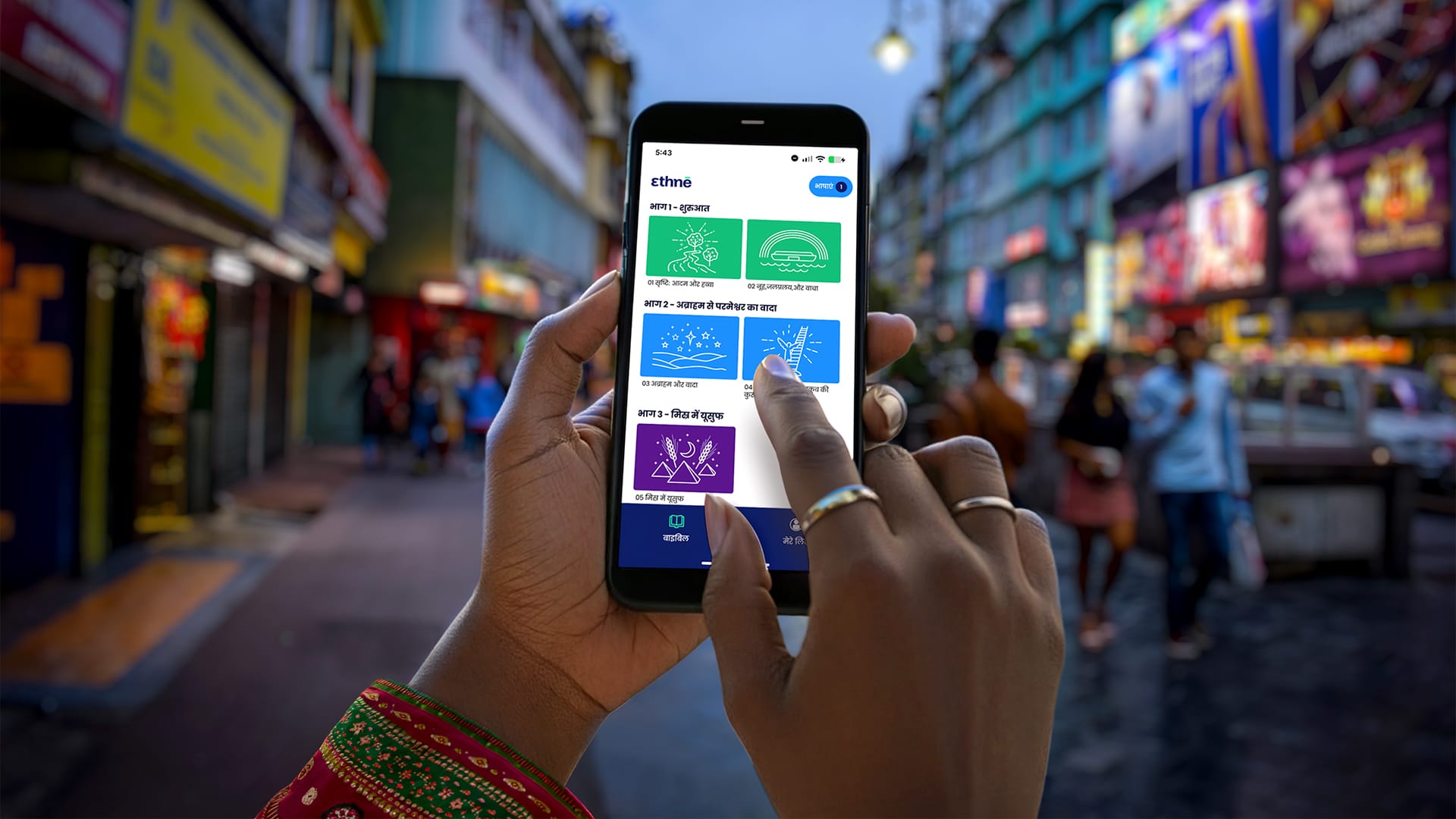
Mandeali New Testament Audio Bible translation added to ethnē!
Mandeali New Testament Bible Audio translation from Davar Partners International added to ethnē!

Estimated Speakers: ~623,000
Geographic Distribution: Spoken primarily in Mandi district, Himachal Pradesh, India
Learn more: Ethnologue, Joshua Project and Wikipedia
Having a Mandeali Bible translation is critically important for reaching hundreds of thousands of believers in the mountain valleys of Himachal Pradesh. Mandeali is a Western Pahari language spoken by about 623,000 people in northern India, particularly in the city of Mandi in the Mandi district of central Himachal Pradesh. The language carries several alternate names, including Mandiyali, Mandiali, Pahari, and Himachali, reflecting its deep roots in the cultural landscape of the Mandi Valley and the broader Himalayan foothills. UNESCO classifies Mandeali as definitely endangered, meaning many Mandeali children are no longer learning it as their mother tongue.
For churches, missionary organizations, and faith communities throughout Mandi district, providing the Bible in Mandeali ensures that the Christian message reaches speakers in their heart language—the language in which people think, pray, and express their deepest beliefs. Speakers of Mandeali are generally bilingual with Hindi as their second language, but Hindi remains a formal and institutional tongue for most speakers. Without a quality Mandeali Bible translation, hundreds of thousands of speakers would struggle to engage directly with Scripture, having to rely on translations in Hindi or English that create barriers to spiritual understanding and personal connection to the biblical text.
Show this QR code to a friend so that they can experience this Mandeali Bible in ethnē today!

This Mandeali Bible translation holds unique value within a language community navigating significant pressures of language shift. Mandeali belongs to the North-Western branch of the Western Pahari group of Indo-Aryan languages and shares close relationships with Kangri and Chambeali. Mandeali Takri served as the language's native script historically, while today speakers write Mandeali using the Devanagari alphabet. The Chambealic varieties spoken in neighboring regions achieve 90 to 95 percent intelligibility with standard Mandeali, meaning that this audio translation can serve a broader swath of Pahari-speaking communities across central Himachal Pradesh. The translation allows theological discussions, worship, and biblical education to take place entirely in Mandeali, enabling preachers, teachers, and believers to communicate biblical concepts using culturally resonant idioms and linguistic structures that speakers recognize as their own.
Churches across Mandi district use Mandeali Scripture in worship services, Sunday schools, and personal devotional life, making Scripture memorization, prayer, and study more natural and meaningful for congregants. The audio format carries special significance in communities where oral communication remains central to daily life and where the language itself lacks formal institutional support in schools or government settings. Mandeali holds no official status and receives no recognition as a medium of instruction, making this audio translation a powerful counter-presence that affirms the dignity and value of the language before God. A quality Mandeali translation supports the growth of indigenous Christian leadership, empowering local pastors and teachers to study and teach Scripture without relying on the linguistic mediation of Hindi or English.
Have a question, or an idea to share? Reach out anytime — we usually reply within a day.
Download ethnē — the Bible app for all peoples.



