
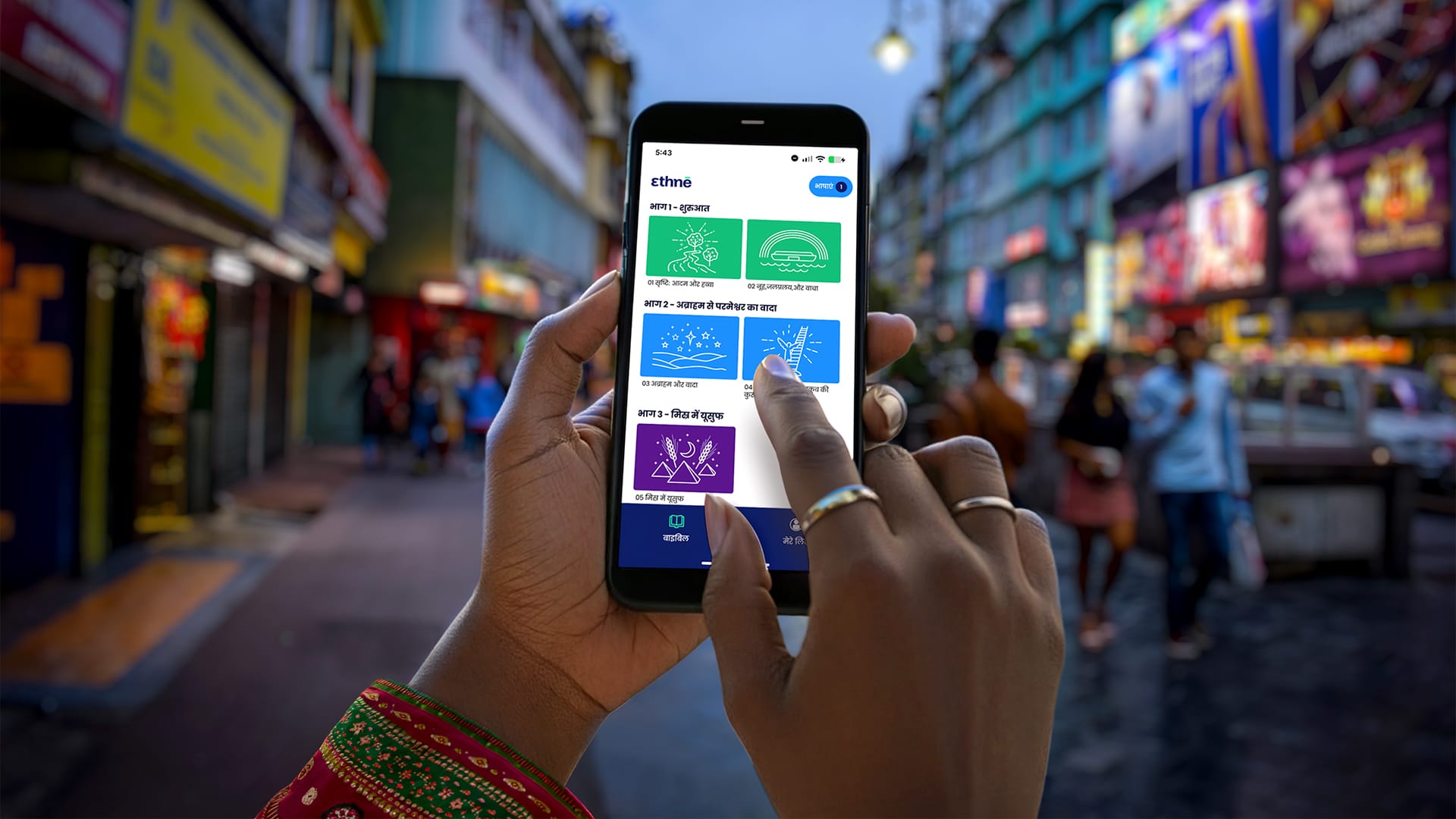
Kangri New Testament Audio Bible from Davar Partners International added to ethnē!
Kangri New Testament Bible Audio translation from Davar Partners International added to ethnē!

Estimated Speakers: 1.1–1.2 Million
Geographic Distribution: Spoken primarily across Kangra, Hamirpur, and Una districts of Himachal Pradesh, India, with additional communities in Punjab and Jammu
Learn more: Ethnologue, Joshua Project and Wikipedia
Having a Kangri Bible translation is critically important for reaching over a million speakers living in the foothills and valleys of Himachal Pradesh. Kangri belongs to the Western Pahari branch of the Indo-Aryan language family and is spoken predominantly across Kangra, Hamirpur, and Una districts of Himachal Pradesh, as well as parts of Mandi and Chamba districts and the Pathankot and Hoshiarpur districts of Punjab. Within Himachal Pradesh alone, the language counts more than 1.1 million speakers, of whom the vast majority live in Kangra district. It functions as the heart language of the Kangra Valley, carrying centuries of oral tradition, folk poetry, and community identity that no neighboring language can fully represent.
For churches, missionary organizations, and faith communities throughout this Himalayan region, providing the Bible in Kangri ensures that the Christian message reaches speakers in their heart language—the language in which people think, pray, and express their deepest beliefs. Kangri holds no official status, and UNESCO classifies it as "definitely endangered," meaning many children no longer learn it as their mother tongue. Without a quality Kangri Bible translation, hundreds of thousands of believers would depend on Hindi or Punjabi translations that create barriers to personal engagement with Scripture and distance the text from the cultural and linguistic world in which Kangri speakers live.
Show this QR code to a friend so that they can experience this Kangri Bible in ethnē today!

This Kangri Bible translation holds unique value for a community whose language has long been displaced from public life by Hindi and Punjabi. The Takri (Tankri) script, which once served as the written form of Kangri, has virtually disappeared; evolving from the Sharada script around the 10th century, Takri was used across northwestern India for administrative and cultural purposes until post-Independence reforms replaced it with Devanagari. Kangri is also a tonal language, distinct from neighboring Punjabi and Dogri in the way it assigns tones, and it forms a dialect continuum with surrounding varieties including Mandeali, Chambeali, Gaddi, and Dogri. An audio Bible in Kangri speaks directly into this living oral heritage, affirming the distinct identity and cultural value of Kangri speakers and allowing worship, theological discussion, and biblical education to take place entirely in the language that resonates most deeply with them.
Churches across Kangra and the broader Himachal Pradesh region use Kangri Scripture in worship services, Sunday schools, and personal devotional practices, making prayer and biblical engagement more natural and meaningful for congregants whose heart language differs from Hindi. These communities have historically sustained Kangri through oral transmission, in folk songs, devotional poetry, rituals, and everyday conversation, which makes the audio format especially well-suited to how Kangri believers already encounter and retain language. A quality Kangri audio Bible also empowers the growth of indigenous Kangri-speaking Christian leadership, enabling pastors and teachers to study, preach, and counsel in the language their communities trust most, without relying on linguistic mediation through a different tongue.
Have a question, or an idea to share? Reach out anytime — we usually reply within a day.
Download ethnē — the Bible app for all peoples.



