
Seki translation added to ethnē!
Seki Bible translation launches for ~12,000–15,000 speakers in Equatorial Guinea and Gabon, a threatened Bantu language vital to indigenous faith.

Estimated Speakers: ~12,000–15,000
Geographic Distribution: Spoken along the coast of Equatorial Guinea and in northwestern Gabon
Learn more: Ethnologue, Joshua Project and Wikipedia
Seki serves as the heart language for approximately 12,000–15,000 speakers in Equatorial Guinea and Gabon, a Bantu community whose ancestral tongue faces mounting pressure from Spanish, Fang, and Kombe. Most speakers live in Rio Campo and Northern Bata in Littoral Province of northwest Equatorial Guinea, along the coast, with smaller communities in Cocobeach (Ogooué-Maritime Province) and Estuaire Province in western Gabon. The language uses a Latin-based orthography with digraphs and diacritics such as è for [ɛ], documenting a phonemic inventory of seven vowels and a rich consonant system including prenasalized stops.
For churches, missionary organizations, and faith communities along the coast of Equatorial Guinea and northern Gabon, providing the Bible in Seki ensures that the Christian message reaches speakers in their heart language—the language in which people think, pray, and pass on their deepest beliefs. Seki speakers generally live and work in Spanish, French, or Fang, yet those remain languages of commerce and administration rather than of the home. Without a Seki translation, this community of roughly 12,000–15,000 would encounter Scripture only through neighboring tongues that hold God's Word at a distance.
Show this QR code to a friend so that they can experience this Seki Bible in ethnē today!

Seki speakers know the language by several alternate names: Baseke, Sheke, Sekiana, Sekiani, Sekiyani, Sekyani, Seseki, Shekiyana, and Seke. No distinct dialects are reported in available sources, suggesting mutual intelligibility across the speech community despite its geographic spread between two nations. The language's Latin orthography documents a full phonemic system, anchoring literacy efforts even as institutional support remains absent. The Seki maintain cultural identity through traditional practices, crafts, and performance arts, preserving community cohesion amid the pressures of dominant regional languages and urban migration.
The Seki are predominantly Christian—Joshua Project estimates 90% in Gabon and 95% in Equatorial Guinea—though Christianity often blends with traditional beliefs in syncretic practice. Oral and audio resources are essential as literacy rates remain low and the language receives no institutional support in education. Indigenous leadership navigates the dual challenge of nurturing faith and preserving linguistic heritage in a community where young people increasingly shift to Spanish, Fang, and Kombe, making Scripture in the heart language critical for deep spiritual formation and intergenerational discipleship.
Have a question, or an idea to share? Reach out anytime — we usually reply within a day.
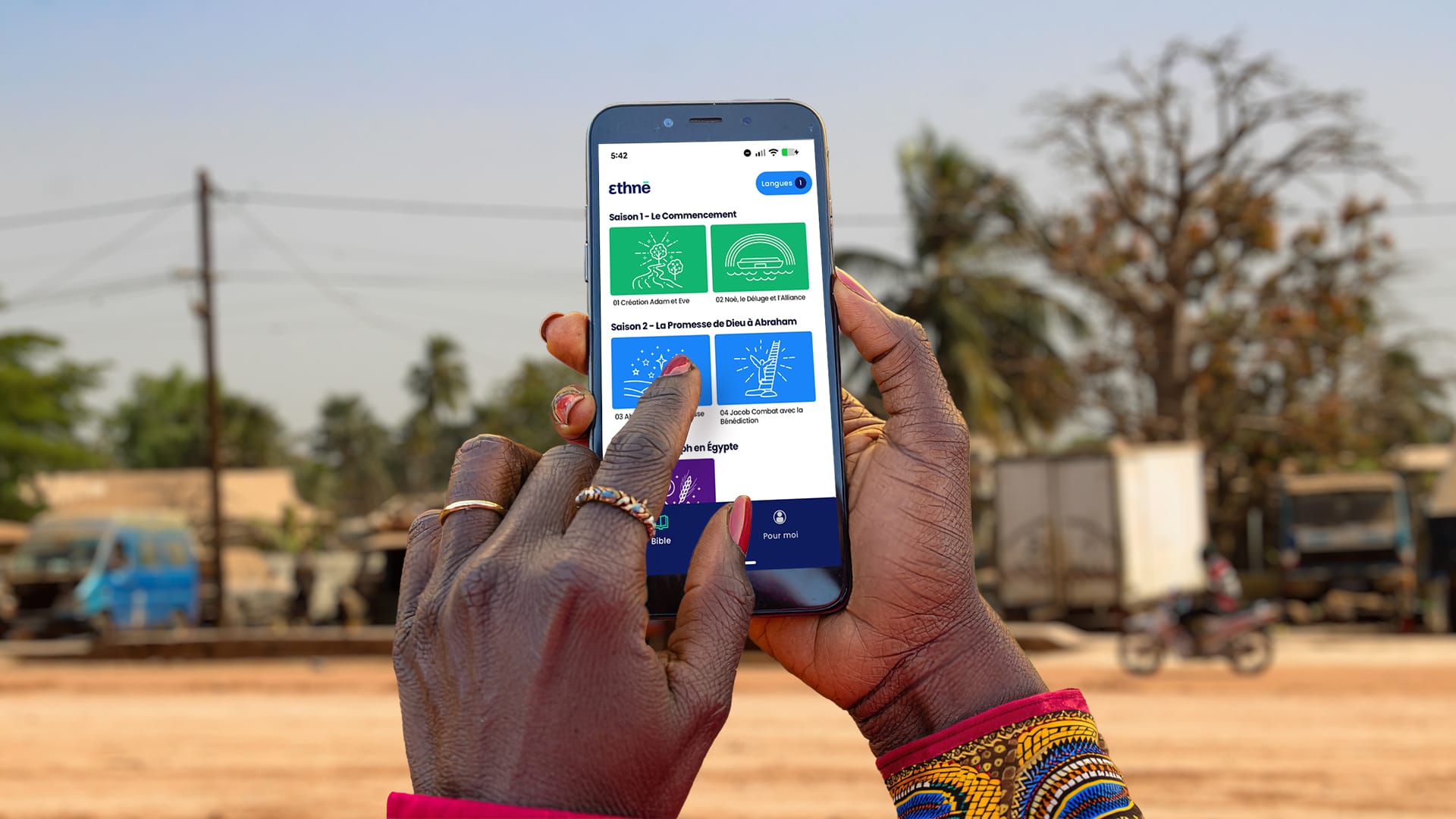
Download ethnē — the Bible app for all peoples.



