
Indian Revised Version (IRV) - Telugu added to ethnē!
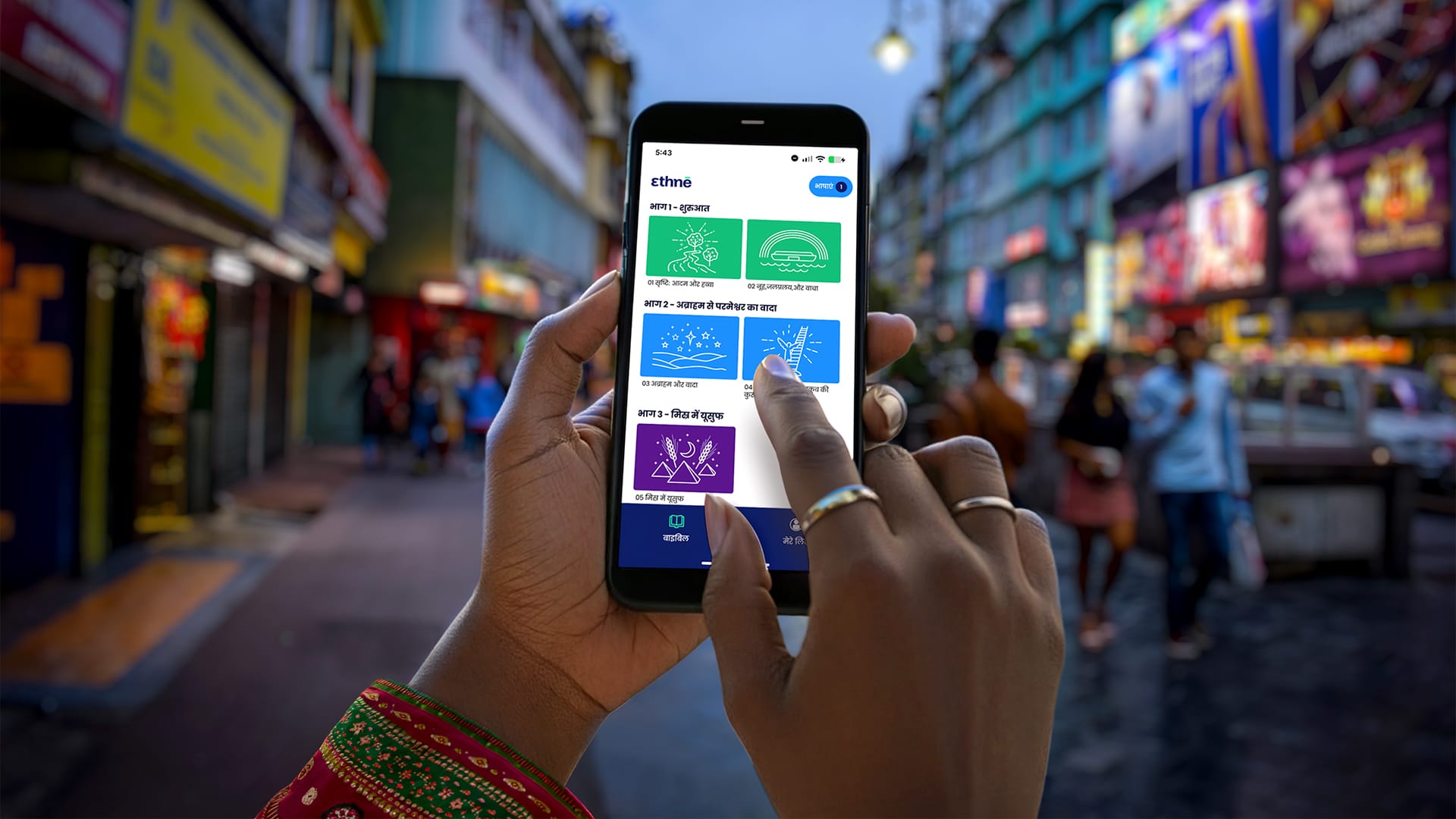
Indian Revised Version - Telugu Audio & Text Bible translation from Davar & Bridge added to ethnē!
Estimated Speakers: 95-100 Million
Geographic Distribution: Spoken primarily in Andhra Pradesh and Telangana, India
Learn more: Ethnologue, Joshua Project and Wikipedia
Having a Telugu Bible translation is critically important for reaching over 95 million Telugu speakers across southeastern India and the global diaspora. Telugu is a Dravidian language native to the Indian states of Andhra Pradesh and Telangana, where it also serves as the official language. It ranks as the fourth most spoken native language in India and the fourteenth most spoken in the world, with approximately 95-100 million speakers globally. The Indian government formally designates Telugu as a classical language, a recognition reflecting a literary and inscriptional history stretching back more than 2,000 years. Telugu speakers also form significant communities in Karnataka, Tamil Nadu, Maharashtra, Odisha, and Chhattisgarh, and a rapidly growing diaspora has established itself in the United States, where Telugu has become the fastest-growing Indian language over the past decade.
For faith communities throughout Andhra Pradesh and Telangana, having Scripture available in Telugu means the Christian message reaches believers in their heart language — the language in which they think, pray, and process their deepest convictions. A heart language is more than a means of communication; it is the vessel through which people understand and express faith at its most personal. Without the Bible in Telugu, millions of speakers must depend on translations in Hindi or English that create distance from the biblical text rather than drawing readers closer to it.
Show this QR code to a friend so that they can experience this Telugu Bible in ethnē today!

Telugu carries three major regional dialects — Coastal Andhra, Rayalaseema, and Telangana — each reflecting distinct historical and cultural influences. The Telangana dialect has absorbed vocabulary from Urdu and Persian due to centuries of Nizam rule, while the Coastal Andhra dialect retains stronger ties to classical Telugu and neighboring Dravidian languages. The Telugu script derives from the ancient Brahmi writing system and features distinctive rounded characters that developed from the tradition of writing on palm leaves; its abugida structure pairs consonant signs with vowel diacritics, and the close phonetic correspondence between script and spoken sound makes Telugu one of the more learnable South Asian writing systems. The Indian Revised Version (IRV) translates directly from the original Hebrew and Greek texts using clear, modern Telugu, enabling readers and listeners across all three dialect regions to engage Scripture without encountering complicated or outdated language.
Telugu Christians form one of the oldest and most established Protestant communities in southern India, with roots extending back to missionary work begun along the Andhra coast in the early nineteenth century. The IRV translation equips pastors and teachers to study and explain Scripture using the natural idioms and grammatical structures of modern Telugu, freeing indigenous church leaders from dependence on foreign-language resources. Audio Bible access through the ethnē app extends this benefit further, reaching believers with limited literacy and allowing rural and oral-learner communities across Andhra Pradesh and Telangana to engage Scripture in the language of their hearts.
Have a question, or an idea to share? Reach out anytime — we usually reply within a day.
Download ethnē — the Bible app for all peoples.



