Estimated Speakers: 75–90 Million
Geographic Distribution: Spoken primarily in Tamil Nadu and Puducherry (India), Sri Lanka, Singapore, and Malaysia
Learn more: Ethnologue, Joshua Project and Wikipedia
The importance of the Tamil language
Tamil is one of the oldest living languages in the world, with over 75 million native speakers spread across South Asia and a global diaspora reaching every continent. Tamil belongs to the Dravidian language family and holds official language status in Tamil Nadu, Sri Lanka, and Singapore. In 2004, Tamil became the first language to receive the status of a legally recognized classical language in India, a distinction that acknowledges its unbroken literary tradition stretching back more than 2,500 years. Tamil speakers form the majority in Tamil Nadu and the union territory of Puducherry, and they also make up significant communities in Sri Lanka, Malaysia, and Singapore.
For the millions of Tamil-speaking Christians across Tamil Nadu, Sri Lanka, Singapore, and the broader diaspora, having Scripture in Tamil ensures that the gospel reaches people in their heart language — the language in which they think, pray, and carry their deepest convictions. Tamil-speaking believers engage Scripture most deeply when it speaks to them in their own tongue. Without a quality Tamil Bible translation, communities from rural Tirunelveli to diaspora congregations in Kuala Lumpur and London would lose direct access to Scripture in the language closest to their hearts.
About this Tamil translation
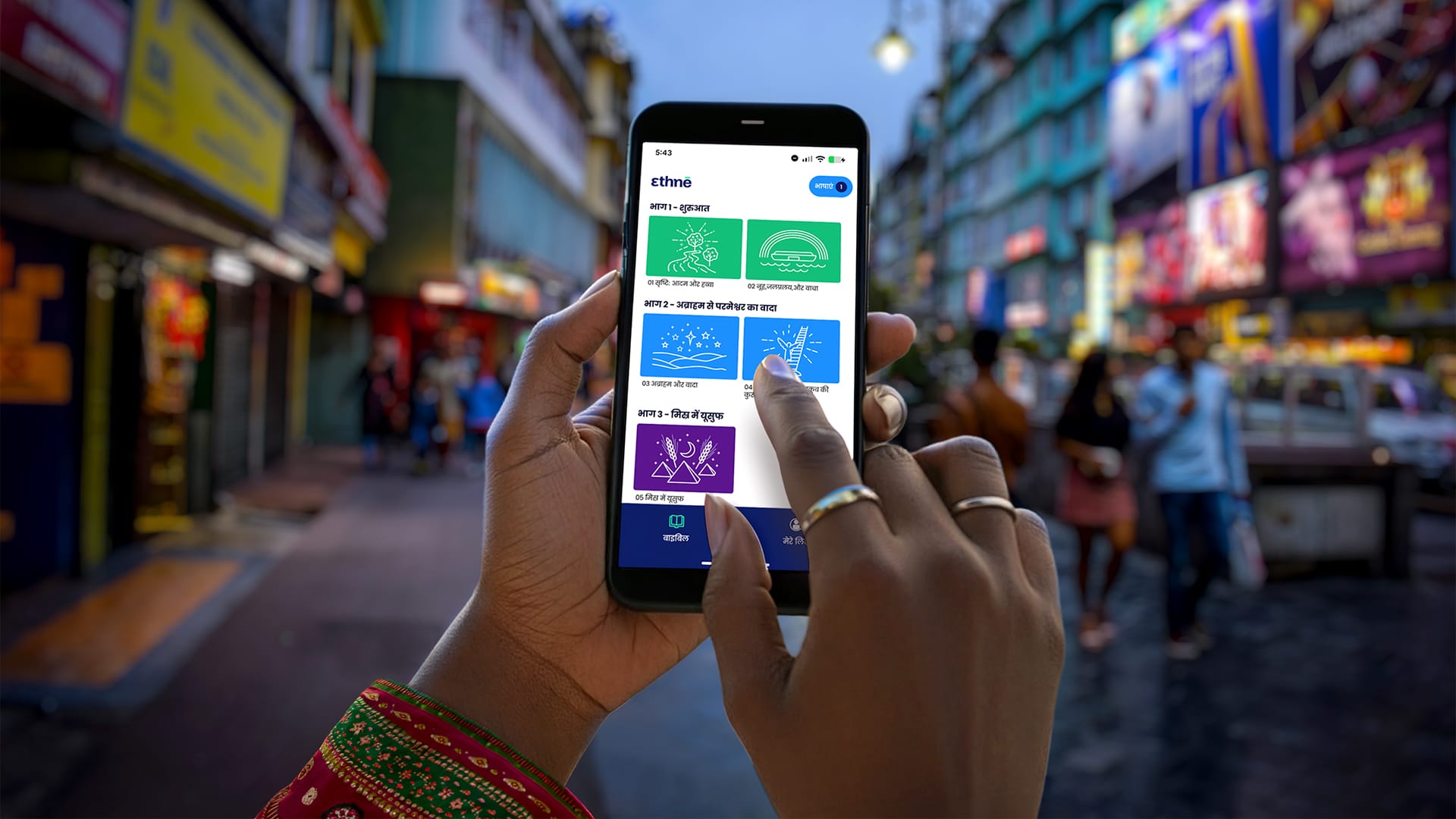
Show this QR code to a friend so that they can experience this Tamil Bible in ethnē today!

Tamil exhibits a distinctive diglossia, with speakers navigating between a classical literary form called centamil and a modern colloquial form called koduntamil, and the language also encompasses regional dialects including Central Tamil, Kongu Tamil, Madurai Tamil, and Nellai Tamil in India, as well as the Jaffna and Batticaloa dialects in Sri Lanka. Scholars frequently compare Tamil's diglossia to that of Arabic, noting that literary Tamil functions as a unifying written standard across regions even as spoken dialects vary considerably. The Tamil IRV translation renders Scripture in accessible modern Tamil that bridges these registers, drawing on the natural language patterns of contemporary speakers while preserving the precision and dignity of Tamil's remarkable literary heritage. This accessibility allows Tamil communities from rural Tamil Nadu to urban Singapore to engage Scripture without the barrier of archaic vocabulary.
This Tamil translation in local churches
Tamil-speaking churches carry a heritage that tradition traces back nearly two millennia, with the belief that the apostle Thomas brought the Christian faith to Tamil communities around 52 AD. Today, Christians make up approximately 6 percent of Tamil Nadu's population, with the highest concentrations in the southern districts of Kanyakumari, Thoothukudi, and Tirunelveli. Tamil Christians represent around 15 percent of India's total Christian population, making Tamil-speaking churches one of the largest Christian communities in all of South Asia. The Tamil IRV audio Bible gives these congregations a direct, accessible tool for worship, teaching, and outreach. Pastors, teachers, and lay leaders can preach and pray from Scripture in the language their communities have spoken for generations, while audio access opens the text to oral learners and those with limited literacy, empowering indigenous Tamil-speaking leadership to root themselves deeply in the Word.