
Garasia New Testament Audio Bible translation added to ethnē!
Garasia New Testament Bible Audio translation from Davar Partners International added to ethnē!

Estimated Speakers: 200,000–300,000
Geographic Distribution: Spoken primarily in Rajasthan and Gujarat, India
Learn more: Ethnologue, Joshua Project and Wikipedia
Having a Garasia Bible translation is critically important for reaching the Garasia tribal communities living across the Aravalli hill regions of western India. The Garasia people inhabit the forested regions of Gujarat and Rajasthan in western central India, speaking an Indo-Aryan language belonging to the Bhil sub-group. The community encompasses several distinct subgroups—most notably the Rajput Garasia and the Adiwasi Garasia—with an estimated combined speaker population of approximately 200,000 to 300,000 people concentrated in the Aravalli hill districts of southern Rajasthan and the northern Gujarat border region. The name "Garasia" refers to landholders living in the Gujarat and Rajasthan states, reflecting the community's historic identity as protectors and cultivators of these rugged highland territories.
For churches, missionary organizations, and faith communities throughout this region, providing the Bible in Garasia ensures that the Christian message reaches speakers in their heart language—the language in which they think, pray, and express their deepest beliefs. Oral traditions serve as the primary mechanism for linguistic and cultural transmission among the Garasia, embedding unique idioms and narratives in everyday discourse and communal recounting. Without Scripture in Garasia, believers face real barriers to spiritual understanding, forced to rely on translations in Gujarati or Hindi that remain distant from their mother tongue.
Show this QR code to a friend so that they can experience this Garasia Bible in ethnē today!

This Garasia Bible translation holds unique value for a community whose language spans several related but distinct dialects. The Garasia people primarily speak dialects classified within the Indo-Aryan language family, closely related to Bhili and incorporating elements of Gujarati and Marwari. These dialects exhibit high lexical similarity within subgroups, ranging from 96 to 99 percent among Rajput Garasia variants and 89 to 96 percent among Adiwasi Garasia, but show lower mutual intelligibility across broader categories like Dungri and Rajput forms. The language uses the Devanagari script, though literacy rates across the community remain low and most cultural knowledge travels through oral means. This translation affirms the distinct identity of Garasia speakers and makes it possible for theological discussions, worship, and biblical education to take place entirely in Garasia, using the culturally embedded idioms and narrative forms that resonate most naturally in this community.
The small but growing community of Garasia believers represents an important frontier for indigenous church development across Rajasthan and Gujarat. Garasia speakers typically switch to Gujarati or Hindi for interactions with outsiders, reflecting widespread functional bilingualism across the community, yet Scripture in the mother tongue reaches past that functional layer and speaks directly to the heart. Churches use Garasia audio Scripture in worship, evangelism, and personal devotion, making it possible for oral learners who cannot read to engage fully with God's Word. This translation also equips indigenous Garasia-speaking leaders to teach and preach without depending on other languages, strengthening the community's capacity to disciple and grow from within.
We'd love to hear from you how we can improve this post or how this translation has been impactful.
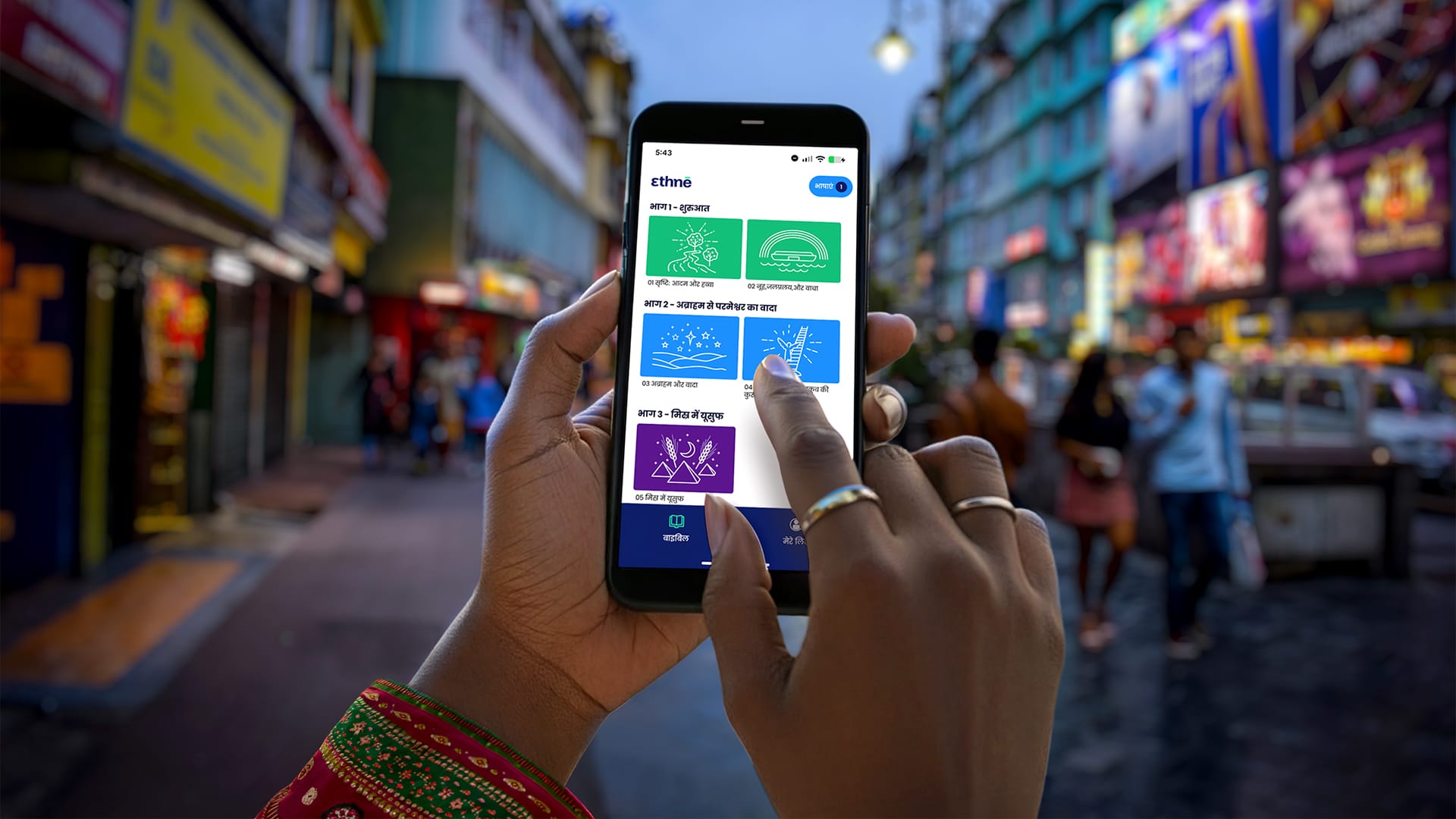
Download ethnē — the Bible app for all peoples.



