
Biblica Open Luganda Contemporary Bible Audio and Text translation added to ethnē!
Biblica Open Luganda Contemporary Bible Audio and Text translation added to ethnē!

Estimated Speakers: 8–20+ Million
Geographic Distribution: Spoken primarily in Uganda, and across the African Great Lakes region
Learn more: Ethnologue, Joshua Project and Wikipedia
Luganda is one of Uganda's most widely spoken languages and serves as the mother tongue of the Baganda, Uganda's largest ethnic group. Native speaker estimates range from approximately 6.5 to 7.5 million people, with total speakers including second-language users reaching 8 to 10 million or more. The language holds a commanding presence in central Uganda, particularly in and around the capital city of Kampala, and also functions as the most spoken unofficial language in Rwanda's capital, Kigali. As a Bantu language rooted in the African Great Lakes region, Luganda evolved from Proto-Bantu and shares close structural ties with neighboring languages such as Lusoga, with which it maintains a lexical similarity of between 82 and 86 percent.
Beyond its native community, Luganda functions as a powerful lingua franca connecting Uganda's more than 40 distinct language groups. The language operates across all domains, including education, media, telecommunication, trade, entertainment, and religious life. Uganda is one of Africa's most strongly Christian nations, with Christians comprising approximately 82 to 85 percent of the population across Catholic, Anglican, Pentecostal, and evangelical traditions. For the millions of Baganda believers and Luganda-speaking Christians throughout this deeply faithful nation, Scripture in Luganda reaches them in their heart language, the language in which they think, pray, and express their deepest convictions. Without a Luganda Bible, these communities must rely on English translations that create a distance between the reader and the personal, transformative experience of encountering Scripture in their own tongue.
Show this QR code to a friend so that they can experience this Luganda Bible in ethnē today!

Luganda carries a sophisticated phonological system that features a rich noun class structure, an agglutinative grammar that builds meaning through combined prefixes, roots, and suffixes, and a tonal quality in which shifts in pitch alter word meaning entirely. The language has four regional dialects, Kooki, Ludiopa, Luvuma, and Sese, each reflecting the geographic breadth of the Buganda region while remaining mutually intelligible across the community. Christian missionaries first committed Luganda to a standardized Latin script in the second half of the 19th century, with the first Luganda grammar published in 1882, and a formal orthography established at the All-Baganda Conference in 1947. This written tradition has produced a rich body of religious and cultural literature, yet for many Luganda speakers, especially those in rural communities, oral engagement with Scripture remains the most natural and accessible way to encounter God's Word.
Luganda holds a historically dominant role in Christian worship throughout Uganda, with the language remaining central to church life across much of the country even as other regional languages have developed their own Scripture resources. Churches throughout the Buganda region and greater Kampala conduct services, preaching, and discipleship in Luganda, and a Luganda audio Bible equips pastors and congregants to engage Scripture through listening rather than reading alone. For oral learners and those with limited literacy, this audio translation removes a significant barrier to personal devotion and communal worship. Indigenous Luganda-speaking church leaders gain a resource that speaks directly into the cultural and linguistic context their congregations already inhabit, strengthening the church's capacity to grow and reproduce in authentically Ugandan forms.
Have a question, or an idea to share? Reach out anytime — we usually reply within a day.
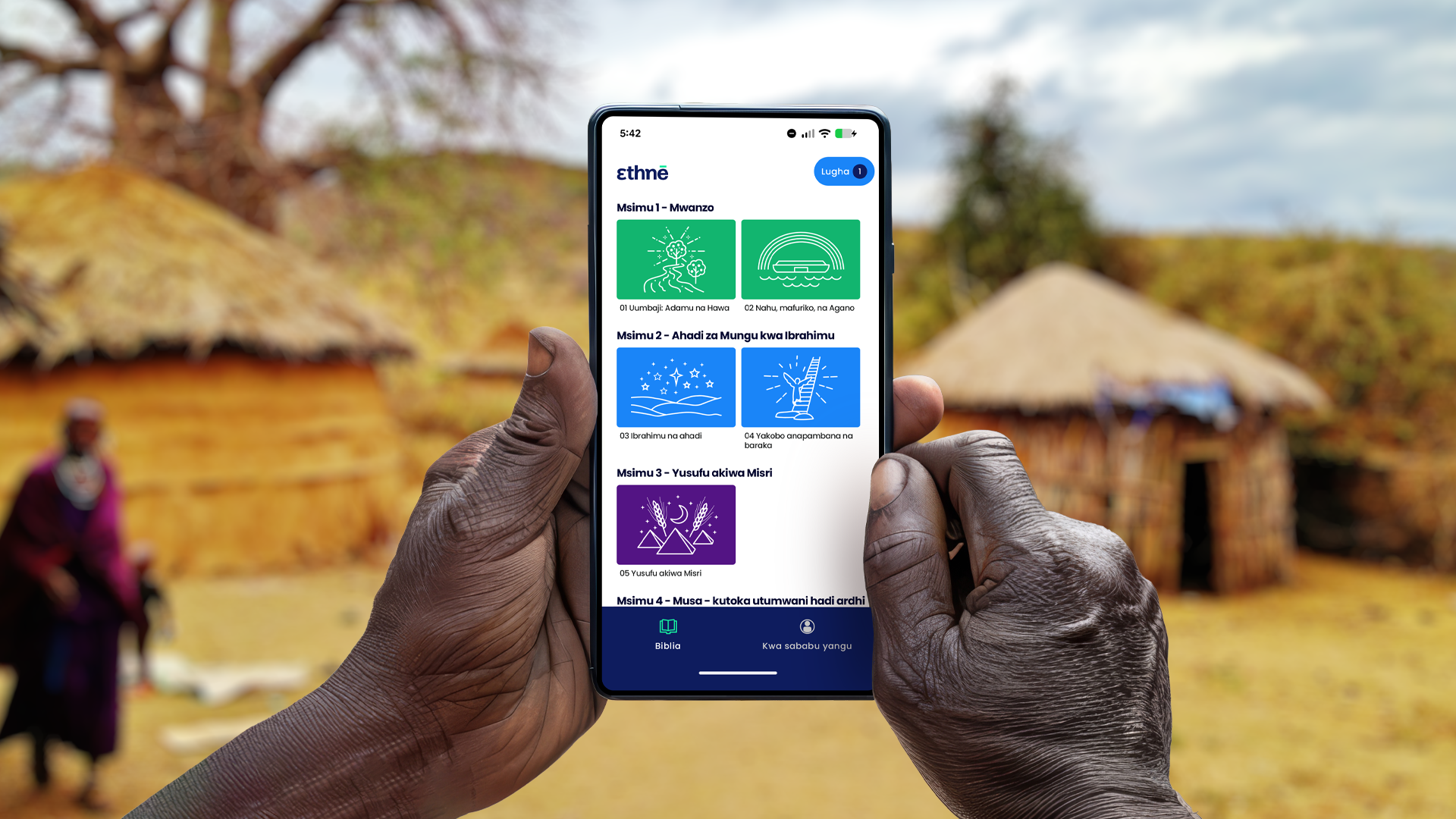
Download ethnē — the Bible app for all peoples.



