Nepali Unlocked Literal Bible (ULB): Full Bible, Audio & Text Edition For Nepal & India
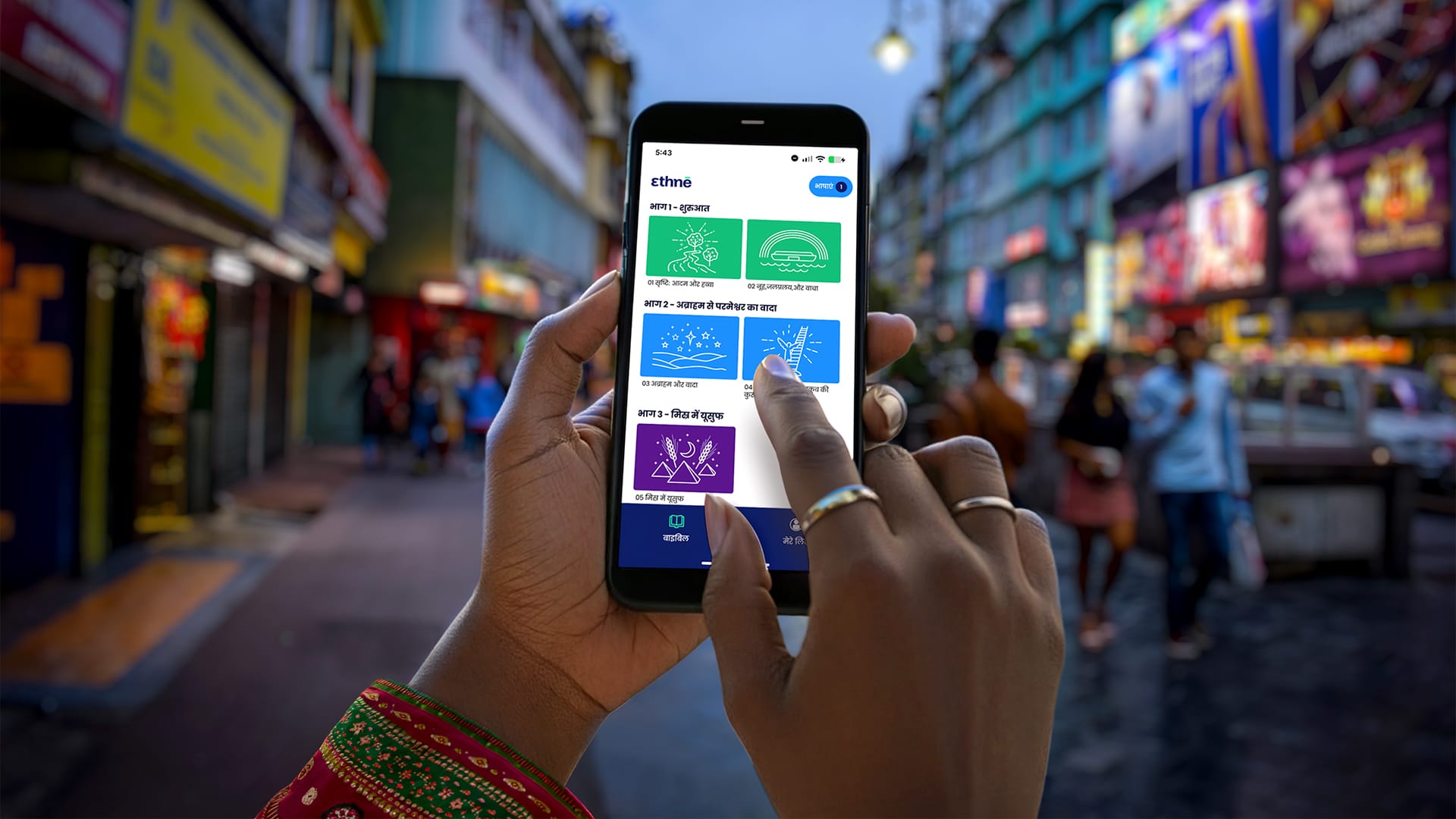
Nepali Full Bible Audio and Text translation from Davar Partners International and Door43 added to ethnē!

Estimated Speakers: 16-20 million speakers
Geographic Distribution: Spoken across Nepal & India (Sikkim, Darjeeling & West Bengal), Bhutan & the global Nepali diaspora
Learn more: Ethnologue, Joshua Project and Wikipedia
Nepali reaches approximately 19 million native speakers and another 14 million as a second language, making it one of the most widely spoken languages in South Asia. It serves as the official and most widely spoken language of Nepal, where it also functions as the country's lingua franca and carries official status in the Indian state of Sikkim and the Gorkhaland Territorial Administration region of West Bengal. Speakers also live in significant numbers in Bhutan, Myanmar, and among diaspora communities in the Middle East, Australia, and beyond. A Nepali Bible translation matters because it reaches this vast, geographically dispersed community in their heart language — the language in which they pray, think, and form their deepest convictions. Without Scripture in Nepali, millions of believers across the Himalayas and beyond must rely on colonial-era languages that distance them from the biblical text rather than drawing them closer to it.
Nepali is an Indo-Aryan language belonging to the Indo-Iranian branch of the Indo-European family, and scholars classify it within the Eastern Pahari group. The language descends from Sanskrit, Prakrit, and Apabhraṃśa, with early forms developing in western Nepal between the 10th and 14th centuries during the Khasa Kingdom. Today Nepali uses the Devanagari script and features a Subject-Object-Verb word order, along with an elaborate system of honorifics that reflects social relationships and cultural hierarchy. These linguistic structures give the language a richness and precision that makes a well-crafted Nepali translation deeply resonant for its speakers.
Show this QR code to a friend so that they can experience this Nepali Bible in ethnē today!
Nepal is home to 124 recorded mother tongues, and Nepali functions as the unifying thread across this remarkable linguistic diversity, serving as the federal official language while provinces maintain the right to designate additional regional languages. Literacy rates vary significantly across Nepal's regions, with substantial gaps between men and women in northern and western provinces which is a context that makes an audio translation especially powerful. Communities that struggle with print literacy can hear and engage with the full text of Scripture in Nepali, their most accessible shared language. In 1914, Ganga Prasad Pradhan worked with British missionaries to complete the first full Nepali Bible in Darjeeling, establishing a translation tradition that this ULB translation continues and deepens for a new generation.
A 2013 report by Gordon Conwell Theological Seminary identified the Nepali church as the fastest growing in the world, with an annual growth rate of 10.9% since 1970 which is a remarkable fact for a country that recorded virtually no Christians in 1951. The 2021 census counted more than 512,000 Christians in Nepal, though many informed observers estimate the true number may reach 1–3 million. Nepali Protestant churches have historically chosen to worship in an indigenous eastern style, setting Christian words to Nepali folk tunes and structuring gatherings around local cultural norms which is a pattern that demonstrates a deep desire for Scripture and worship that feel authentically Nepali. The Nepali ULB translation serves this thriving, indigenous church movement by putting a trustworthy, literal text in the hands of pastors, teachers, and oral learners alike, empowering Nepali-speaking believers across Nepal, India, and the diaspora to study, memorize, and proclaim Scripture in the language their community calls home.