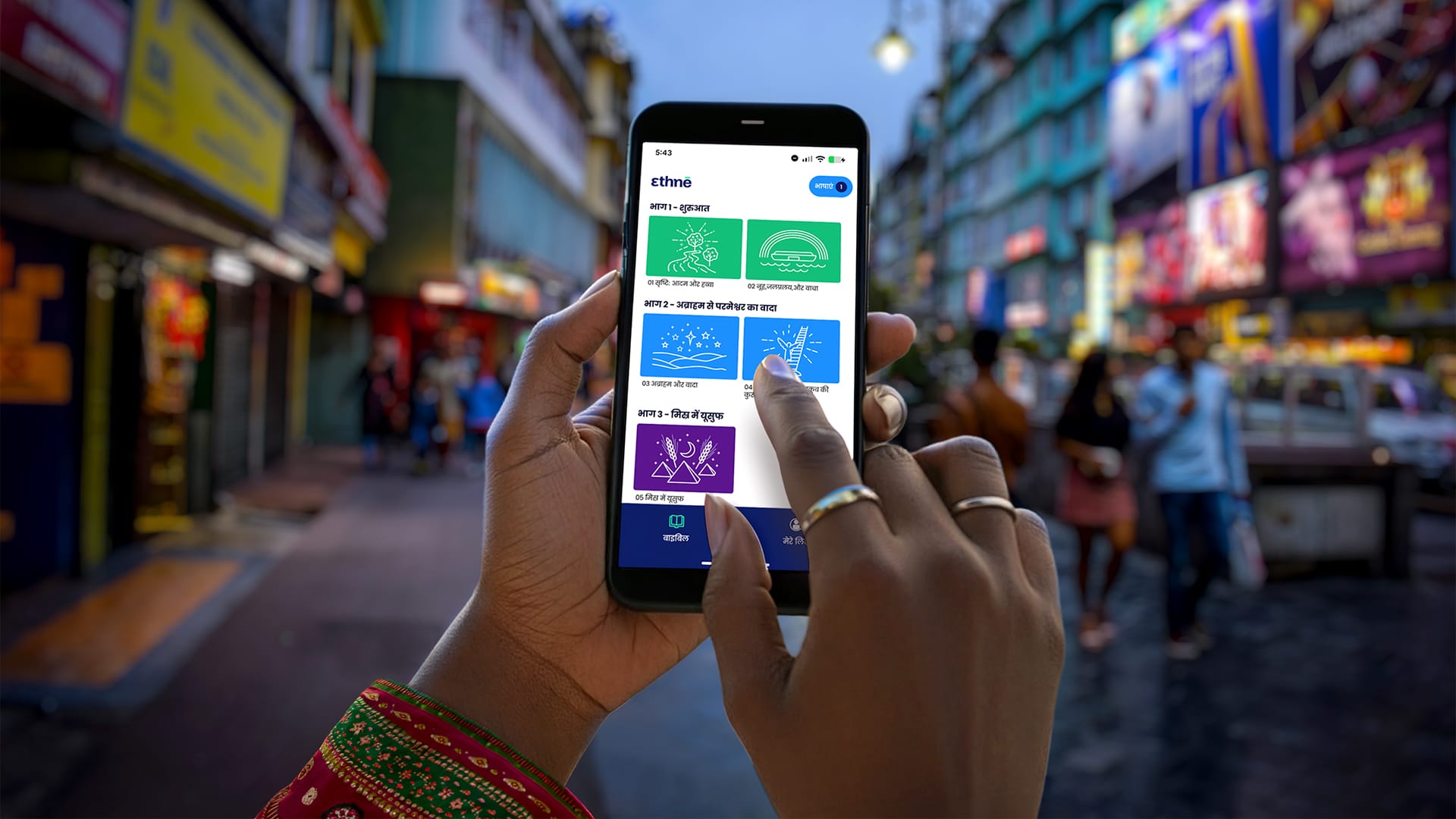
Dangi New Testament Audio Bible: New Testament Audio For India
Dangi New Testament Bible Audio translation from Davar Partners International added to ethnē!

Estimated Speakers: 135,000-140,000 speakers
Geographic Distribution: Primarily spoken in Dang district of Gujarat; also in bordering areas of Maharashtra, India
Learn more: Ethnologue, Joshua Project and Wikipedia
Having a Dangi New Testament Audio Bible is critically important for reaching believers in the Dang district of southeastern Gujarat. Dangi is spoken by approximately 135,000-140,000 people, with the 2011 Census recording that 59.55% of Dang district's population (about 136,000 speakers) uses Dangi as their first language. As an Indo-Aryan language closely related to Khandeshi and combining elements of Gujarati and Marathi with distinctive local vocabulary, Dangi serves as the heart language for the indigenous Adivasi communities—primarily Bhil and related tribal groups—who inhabit the densely forested, hilly terrain of the Dang district and surrounding areas.
For churches, missionary organizations, and faith communities throughout the Dangs region, providing the New Testament in Dangi audio format ensures that Scripture is accessible to speakers in their mother tongue. The Dangi people, comprising approximately 94% of Dang district's population as Scheduled Tribes, maintain strong cultural and linguistic traditions rooted in their forest-based livelihoods and centuries-old heritage in the northern Sahyadri (Western Ghats) range. Without quality Dangi Scripture in accessible audio format, speakers would struggle to engage deeply with God's Word, having to rely instead on Gujarati, Marathi, or Hindi—languages that lack the intimate connection and cultural resonance of Dangi, the language they speak at home and in their communities.
Show this QR code to a friend so that they can experience this Dangi Bible in ethnē today!

It's important to note that the Dangi New Testament Audio Bible holds unique value as it celebrates and preserves this indigenous tribal language while making Scripture accessible to oral learners. Dangi serves as the language of trade and daily communication throughout the Dangs region, functioning as a linguistic bridge that combines Gujarati and Marathi influences with unique local expressions rooted in the community's forest culture and tribal traditions. As a stable indigenous language of the Indo-European family, Dangi is thought to be used as a first language by all in the ethnic community, though it is not taught in formal schools. This translation enables theological discussions, worship, and biblical teaching to be conducted entirely in Dangi, allowing preachers, teachers, and believers to communicate the Gospel using culturally relevant idioms and linguistic structures that reflect the distinctive heritage of the Bhil people and their centuries-old connection to the forests and hills of the Dangs.
Churches use the Dangi New Testament Audio Bible in worship services, evangelism efforts, discipleship programs, and personal devotional practices throughout Dang district and surrounding areas of southeastern Gujarat and neighboring Maharashtra. The audio format is particularly valuable for reaching the predominantly tribal population where oral traditions remain strong and many live in rural, forested areas where literacy rates vary. The availability of this audio New Testament facilitates Scripture memorization, group Bible studies, and personal meditation on God's Word in the natural rhythm and flow of the Dangi language. Additionally, this resource empowers indigenous Dangi-speaking Christian leadership, as pastors and lay leaders can teach and share Scripture in the language most deeply understood by the people—the language that carries the cultural identity and spiritual expressions of the Bhil and tribal communities—fostering authentic spiritual growth and community transformation in this linguistically and culturally distinct region of western India.