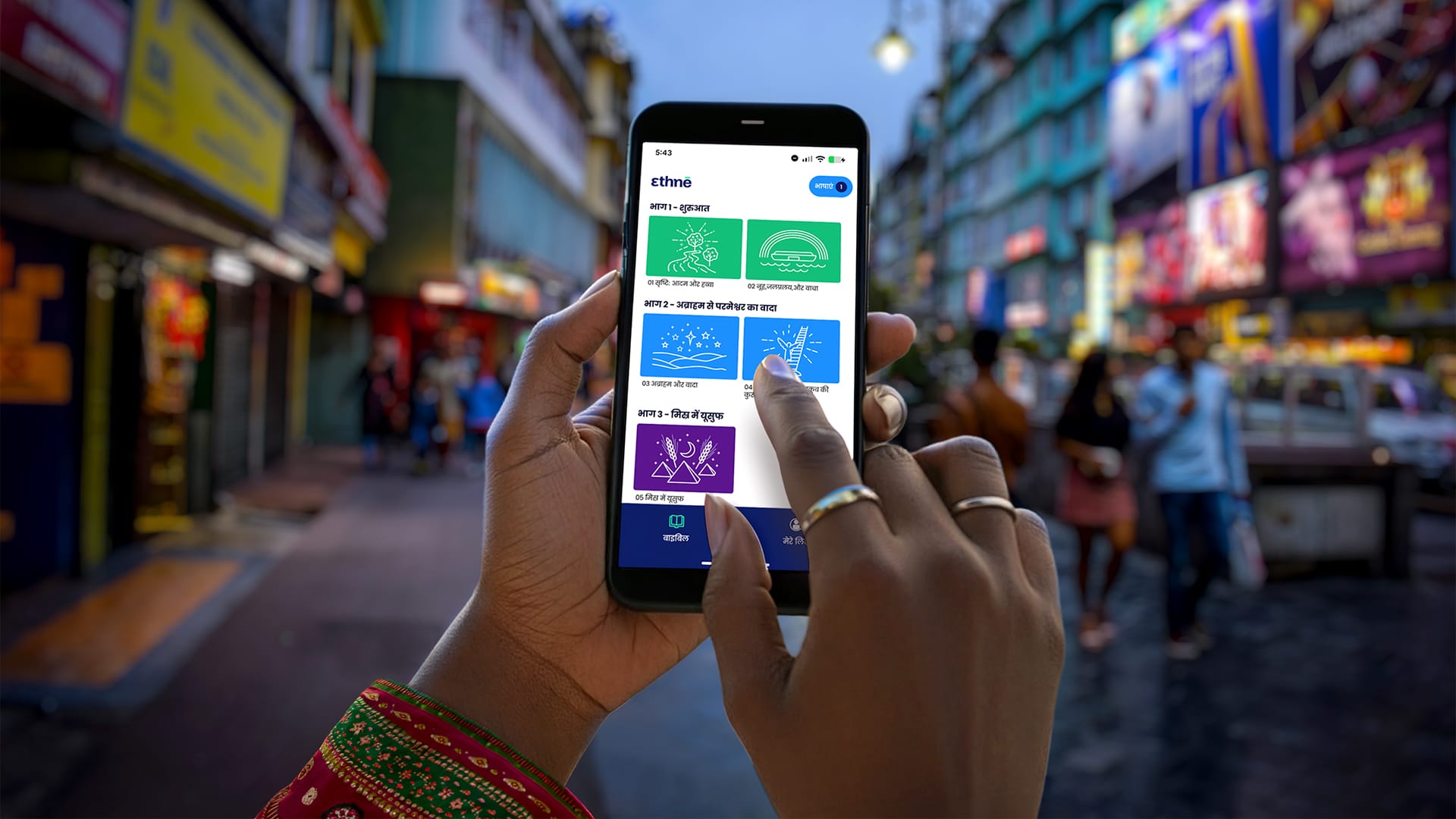
Chambeali Standard Version New Testament Audio Bible: New Testament Audio For India
Chambeali New Testament Bible Audio translation from Davar Partners International added to ethnē!

Estimated Speakers: 124,000-126,000 speakers
Geographic Distribution: Primarily spoken in Chamba district of Himachal Pradesh; also in Jammu and Kashmir, India
Learn more: Ethnologue, Joshua Project and Wikipedia
Having a Chambeali New Testament Audio Bible is critically important for reaching believers in the historic Chamba region of Himachal Pradesh. Chambeali is spoken by approximately 124,000-126,000 people, primarily in the Chamba district's Sadar tehsil (section), with additional speakers in neighboring Jammu and Kashmir. As an indigenous Western Pahari language of the Indo-Aryan family, Chambeali serves as the heart language for communities in the scenic Chamba valley, a region often called the "Switzerland of India" or "Chotta Kashmir" for its breathtaking mountain landscapes.
For churches, missionary organizations, and faith communities throughout the Chamba region, providing the New Testament in Chambeali audio format ensures that Scripture is accessible to speakers in their mother tongue. UNESCO classifies Chambeali as "definitely endangered," meaning many Chambeali children are no longer learning the language as their first language. Without quality Chambeali Scripture in accessible audio format, speakers would struggle to engage deeply with God's Word, having to rely instead on Hindi or other languages that lack the emotional resonance and cultural connection of Chambeali, the language they speak at home and in their communities.
Show this QR code to a friend so that they can experience this Chambeali Bible in ethnē today!

It's important to note that the Chambeali Standard Version New Testament Audio Bible holds unique value as it preserves and celebrates this endangered Pahari language while making Scripture accessible to oral learners. Produced in 2022 through the partnership of Davar Partners International, Bridge Connectivity Solutions, and The Love Fellowship, this audio translation allows believers to hear God's Word in the dialect they use in everyday conversations, even within educational, administrative, and judicial contexts. Chambeali includes three distinct dialects—Bansbali, Bansyari, and Gadi Chameali—and has a high degree of mutual intelligibility with neighboring Pahari languages like Mandeali (83%). The language historically used the Takri script (the Chambeali version serves as the Unicode standard for Takri), though it now uses Devanagari script for writing. This translation enables theological discussions, worship, and biblical teaching to be conducted entirely in Chambeali, allowing preachers, teachers, and believers to communicate the Gospel using culturally relevant idioms and linguistic structures that reflect the region's rich heritage.
Churches use the Chambeali Standard Version New Testament Audio Bible in worship services, evangelism efforts, discipleship programs, and personal devotional practices throughout the Chamba district and surrounding areas of Himachal Pradesh. While the language is spoken by all generations, it is often mixed with Hindi and English among children, making this audio resource particularly valuable for preserving linguistic and spiritual heritage. The audio format is especially important for oral learners and for reaching communities where Chambeali remains the primary language of oral communication even in formal settings. The availability of this audio New Testament facilitates Scripture memorization, group Bible studies, and personal meditation on God's Word in the natural rhythm and flow of the Chambeali language. Additionally, this resource empowers indigenous Chambeali-speaking Christian leadership, as pastors and lay leaders can teach and share Scripture in the language most deeply understood by the people, fostering authentic spiritual growth and community transformation in this linguistically diverse Himalayan region.