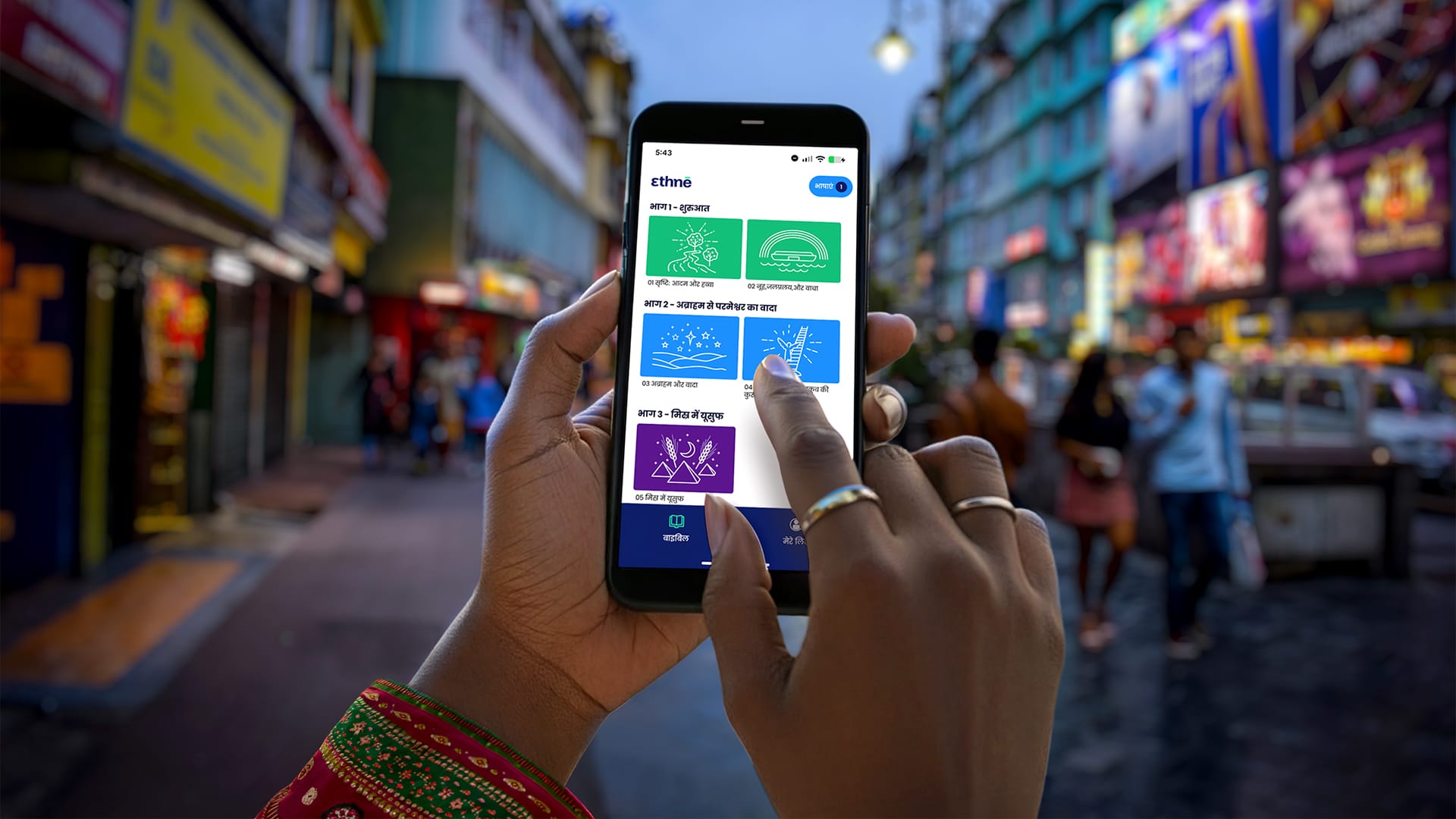
Bilaspuri New Testament Audio Bible: NT Bible, Audio Edition For India
Bilaspuri Audio New Testament Bible translation from Davar Partners International added to ethnē!

Estimated Speakers: 296,000-368,000
Geographic Distribution: Spoken in Bilaspur district of Himachal Pradesh and Rupnagar district of Punjab, India
Learn more: Ethnologue, Joshua Project and Wikipedia
Having a Bilaspuri Bible translation is critically important for reaching communities in the mountainous regions of Himachal Pradesh and Punjab. Bilaspuri (also known as Kahluri or Bilaspuri Pahari) is a Western Pahari language spoken by approximately 296,000 to 368,000 people. It serves as the heart language which is the language in which they think, pray, and express their deepest beliefs. for ethnic communities in the historic region of Bilaspur, which was once a princely state in the Punjab Hills.
For churches, missionary organizations, and faith communities throughout this region, providing the Bible in Bilaspuri ensures that the Christian message is accessible to speakers in their heart language. Although Bilaspuri is often classified as a dialect of Punjabi in official census records, it is a distinct language with its own identity and unique linguistic features. Without a quality Bilaspuri Bible translation, hundreds of thousands of speakers would struggle to engage directly with Scripture, having to rely instead on translations in Hindi, Punjabi, or Urdu that create barriers to spiritual understanding and personal connection to the biblical text.
Show this QR code to a friend so that they can experience this Bilaspuri Bible in ethnē today!

It's important to note that this Bilaspuri Bible translation holds unique value for a language community that has faced marginalization, particularly since independence when institutional support for the language declined in favor of Hindi. The language has been historically written in the Takri script but is now typically written in Devanagari. This translation affirms the distinct identity and cultural heritage of Bilaspuri speakers and allows for theological discussions, worship, and biblical education to be conducted entirely in Bilaspuri, enabling preachers, teachers, and believers to communicate biblical concepts using culturally relevant idioms, metaphors, and linguistic structures that resonate with Bilaspuri speakers in their Himalayan context.
Churches use Bilaspuri Scripture translations in worship services, Sunday schools, and personal devotional practices, making Scripture memorization, study, and prayer more natural and meaningful. Additionally, a quality Bilaspuri translation facilitates the growth of indigenous Bilaspuri-speaking Christian leadership, as pastors and theologians can study and teach Scripture without the linguistic mediation of foreign languages.