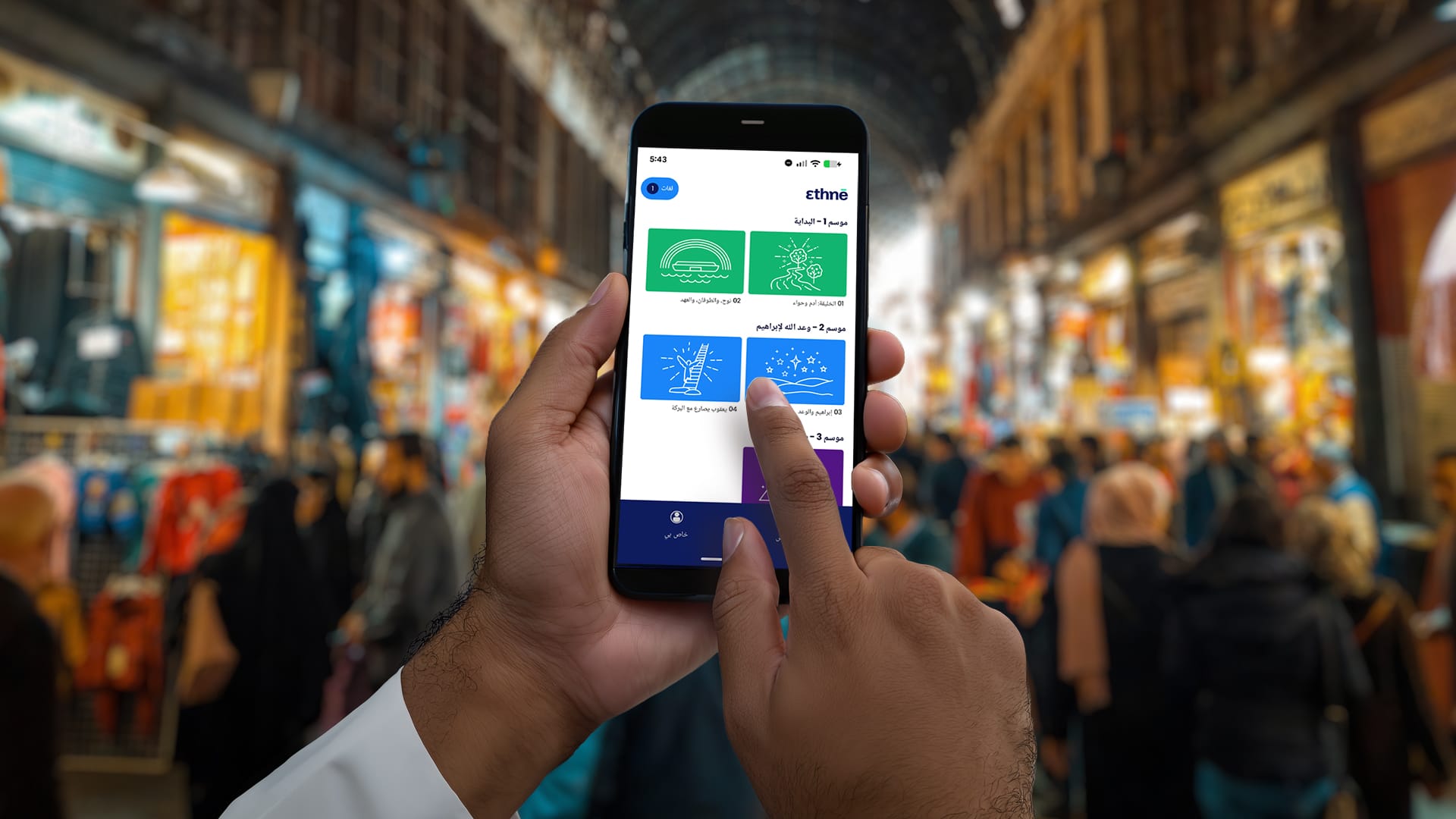
Biblica Open New Arabic Version: Full Bible Text Edition For Arabic Speakers
Arabic Audio Bible translation from Biblica, inc added to ethnē!

Estimated Speakers: 420 million speakers worldwide
Geographic Distribution: Spoken across 25+ countries in the Middle East, North Africa, and the Arabian Peninsula
Learn more: Ethnologue, Joshua Project and Wikipedia
Having the Open New Arabic Version is critically important for reaching Arabic-speaking believers across one of the world's most linguistically and culturally significant regions. Arabic is spoken by approximately 420 million people worldwide, making it the fifth most-spoken language globally and one of the six official languages of the United Nations. Modern Standard Arabic serves as the lingua franca across the Arab world, uniting speakers from Morocco to Iraq, from Syria to Sudan. While spoken Arabic varies widely across regions, with spoken dialects often being mutually unintelligible, written Arabic provides a shared standard that transcends these differences. Nearly all formal writing, publishing, and media across the Arab world uses Modern Standard Arabic, making it the natural choice for a translation intended to reach the broadest possible audience.
For churches, missionary organizations, and faith communities throughout the Arab world and among Arabic-speaking diaspora communities globally, the Open New Arabic Version ensures that Scripture is accessible in clear, contemporary Arabic. While Classical Arabic remains the language of the Quran and formal religious discourse, many Arabic speakers benefit from translations that use modern, simplified language. Without accessible Arabic Bible translations like the Open New Arabic Version, millions of Arabic speakers would struggle to engage with Scripture in a form that speaks naturally to contemporary readers, particularly younger generations who may find older translations difficult to comprehend.
Show this QR code to a friend so that they can experience the Hausa Bible in ethnē today!
It's important to note that the Open New Arabic Version (originally known as Kitab al-Hayat, or "Book of Life") holds unique value as a contemporary translation modeled after the New International Version (NIV). Completed in 1988 and published by Biblica, this translation has achieved wide acceptance throughout the Arab world by balancing clarity with faithfulness to the original texts. It uses simplified language compared to the classical Van Dyck translation, making it more accessible while maintaining scholarly rigor through verification against Greek and Hebrew original texts. This translation allows for theological discussions, worship, and biblical education to be conducted in Arabic that resonates with modern readers, enabling preachers, teachers, and believers to communicate biblical concepts using contemporary idioms and expressions.
Churches use the Open New Arabic Version in worship services, Bible study groups, Sunday schools, and personal devotional practices across the Arab world and among Arabic-speaking communities in Europe, North America, Australia, and beyond. The translation's clarity makes Scripture study, memorization, and teaching more accessible, particularly for younger believers and new Christians. Additionally, the Open New Arabic Version facilitates Christian education and discipleship, as pastors, teachers, and lay leaders can teach Scripture in Arabic that connects with contemporary Arabic speakers without the linguistic barriers posed by classical translations.